
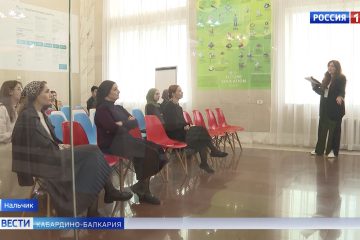
Celebrating Philologist Day: Honoring Language and Literature Experts
Each year on May 25, Russia observes the Day of the Philologist, a professional holiday honoring the linguists, literary scholars, educators, translators, and librarians dedicated to the study of language and literature. Established in the late 1980s following an initiative by faculty and students at Moscow State University, the day serves to recognise the vital role of those who preserve and interpret the written word.
The Human Element in Philology
For many, the path to this discipline begins long before university. Amina Kanukoeva, who has spent eight years working as a teacher of Russian language and literature, recalls that her career choice was shaped by academic successes during her school years. After becoming a prize-winner in a literature olympiad, she was admitted to the philology faculty without examinations, a turning point she says she has never regretted.

Multifaceted Academic Traditions
At the Kabardino-Balkarian State University (KBSU), philology represents a broad spectrum of disciplines. The institution integrates the study of Russian, Kabardian-Cherkess, and Karachay-Balkar languages, reflecting the rich linguistic diversity of the region.
Nadezhda Chaika, a docent at the Department of Russian Language and General Linguistics, emphasizes that a deep knowledge of literature is essential to developing a true specialist. Meanwhile, Albek Abazov, a docent at the Department of Kabardian-Cherkess Language and Literature, views philology as a universal key, asserting that it is impossible to advance in any field of knowledge without the foundational understanding that philology provides.
The Evolution of the Discipline
The academic landscape is shifting as younger researchers approach the science of philology through the lens of modern technology. programmes are increasingly incorporating the analysis of texts, including those generated by artificial intelligence.
Mussa Ketenchiev, who has headed the Department of Karachay-Balkar Philology at KBSU for over 35 years, notes a growing interest among students in etymology and the search for the roots of language. While methods of study may evolve to incorporate new tools, educators remain connected by a shared commitment to the power of language.
Looking Ahead
As philology continues to intersect with technological advancement, the field may see a shift in how linguistic heritage is documented and preserved. It is likely that future curricula will continue to balance the mastery of classical literature with the analysis of AI-generated content, potentially creating new methodologies for understanding how language evolves in a digital age. Educators will likely continue to face the challenge of maintaining traditional academic rigor while embracing these emerging digital tools.

Frequently Asked Questions
When is the Day of the Philologist celebrated?
The holiday is traditionally observed on May 25.
Which languages are studied at the Kabardino-Balkarian State University?
The university features departments covering Russian, Kabardian-Cherkess, and Karachay-Balkar languages.
How are modern technologies impacting philology studies?
Younger researchers are beginning to view philology through the lens of modern technology, with university programmes now including the analysis of texts created by artificial intelligence.
How do you think the integration of artificial intelligence will change the way we study and interpret literature in the coming years?