

Chinese President Xi Jinping Meets Myanmar Leader, Seeks to Deepen Bilateral Ties
What Are the Key Areas of China-Myanmar Cooperation?
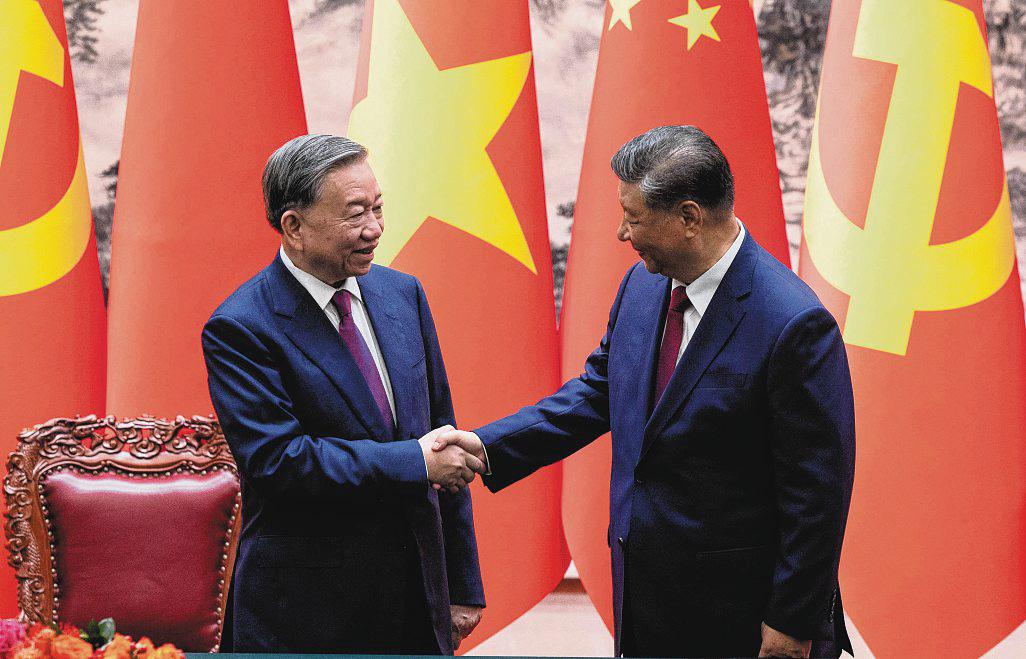
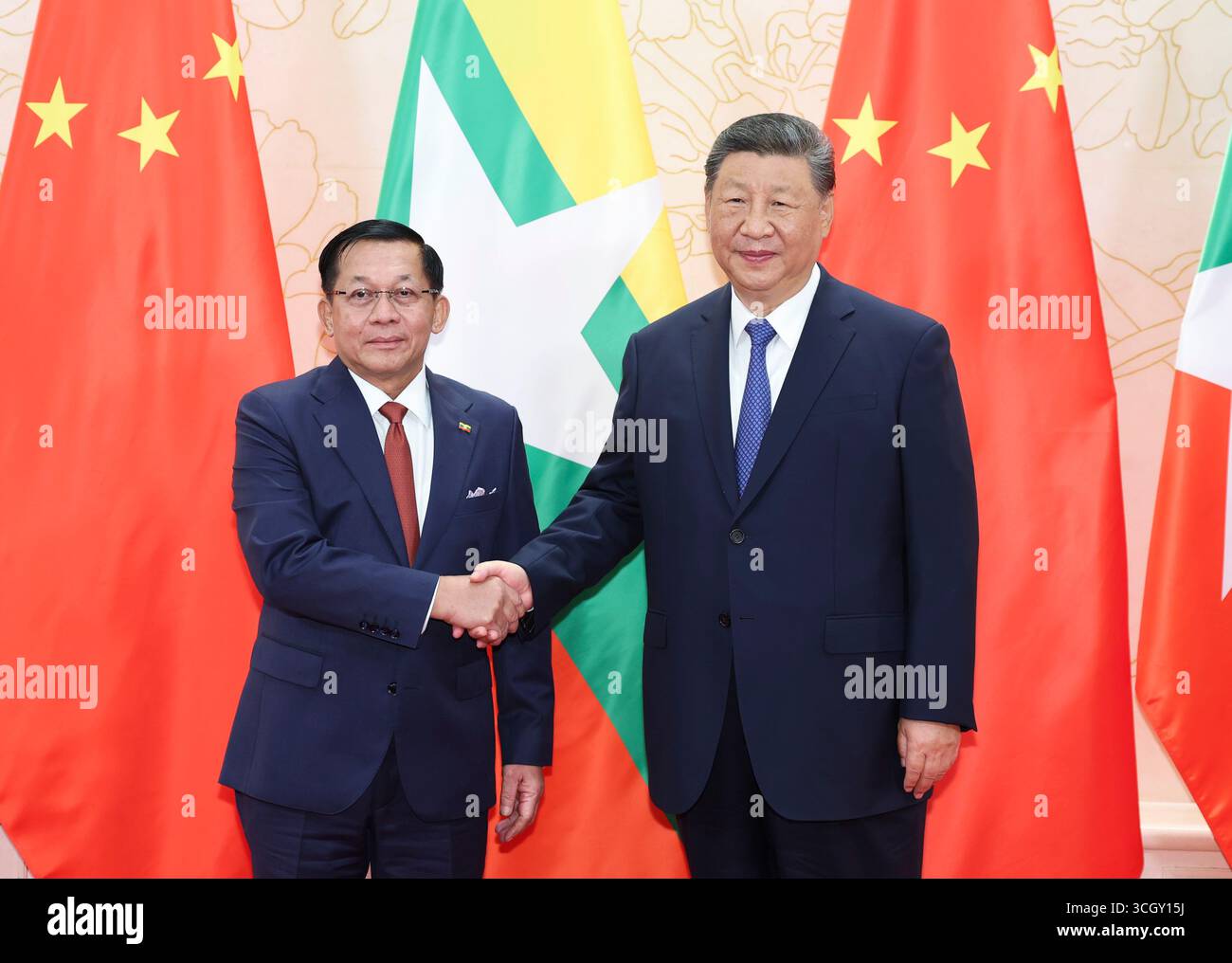
Chinese President Xi Jinping and Myanmar’s military leader, Min Aung Hlaing, signed 18 cooperation agreements during their June 2026 meeting in Beijing, focusing on free trade, disaster relief, and cross-border transportation. The deals also include health and media collaboration, reflecting a broad strategic partnership. According to Chinese state media, the two leaders emphasized “comprehensive strategic cooperation” and “brotherly friendship,” despite Myanmar’s political isolation after the 2021 coup.
China’s support for Min Aung Hlaing’s government contrasts with international criticism of the military’s human rights record. The two nations also addressed shared challenges, including online gambling and telecommunications fraud, with Xi urging “crackdowns” on such activities. The agreements come as Beijing expands its Belt and Road Initiative (BRI) in Myanmar, including a controversial oil and gas pipeline and a planned deep-sea port, despite ongoing violence in conflict zones.
How Does This Meeting Affect Regional Dynamics?
The summit marks Min Aung Hlaing’s second high-profile visit to China in under a year, following his attendance at the Shanghai Cooperation Organisation summit in August 2025. Analysts suggest the visits signal a shift in Myanmar’s foreign policy, with Beijing offering a counterbalance to Western sanctions. China’s diplomatic backing could enhance Min Aung Hlaing’s legitimacy, though it also risks further alienating global partners.
Regional stability remains a concern. Myanmar’s civil war, now in its fifth year, has displaced millions and fueled cross-border crime. China’s investments in the Greater Mekong subregion, including infrastructure projects, aim to bolster economic ties but face risks from ongoing conflict. A 2023 report by the International Crisis Group noted that BRI projects in Myanmar “remain vulnerable to sabotage and political instability.”
Why Is China’s Support for Myanmar Controversial?
China’s unwavering support for Min Aung Hlaing’s government has drawn scrutiny. While other nations, including the U.S. and EU, have imposed sanctions over the coup, Beijing has maintained diplomatic and economic ties. Xi’s public endorsement of the Myanmar leader during their June 2026 meeting underscores this stance, with Chinese state media framing the relationship as “unshakeable.”
Human rights groups, however, highlight the military’s role in ethnic minority clashes and the detention of Aung San Suu Kyi, Myanmar’s former leader. A 2024 UN report documented “systematic abuses” by Myanmar’s armed forces, including mass killings and forced labor. China’s refusal to condemn these actions has led to accusations of complicity, though Beijing asserts it advocates for “peaceful dialogue” in Myanmar.
What Challenges Remain in Bilateral Relations?
Despite the cooperation deals, tensions persist. Online gambling and scam centers in Myanmar, particularly in areas like Myawaddy, have become a flashpoint. Chinese authorities have repeatedly called for joint efforts to combat these issues, citing “transnational crime networks” that exploit Myanmar’s weak governance. A 2025 crackdown by Myanmar’s military reportedly targeted several such facilities, though enforcement remains inconsistent.
Infrastructure projects under the BRI also face obstacles. The Kyaukpyu Port, a key BRI initiative, has been delayed due to security concerns and funding disputes. Local communities have raised environmental and land rights issues, complicating Beijing’s vision for regional connectivity. A 2026 study by the Asian Development Bank noted that “geopolitical risks and local resistance could hinder the project’s long-term success.”
How Do These Developments Impact Global Alliances?
The China-Myanmar partnership reflects broader geopolitical trends. As the U.S. and its allies prioritize Indo-Pacific security, Beijing’s deepening ties with Myanmar challenge Western influence. The military junta’s reliance on China has also shifted regional power dynamics, with some analysts warning of a “Sino-Myanmar axis” that could destabilize Southeast Asia.
For China, Myanmar is a critical corridor for trade and energy. The country’s strategic location along the India-Myanmar-China (IMC) economic corridor offers access to the Bay of Bengal, enhancing Beijing’s global trade routes. However, the junta’s instability and international isolation pose risks to these ambitions.
Did You Know?
Myanmar’s military has controlled the country since the 2021 coup, but China’s economic investments have provided a lifeline. The BRI’s Kyaukpyu Port, once hailed as a “game-changer,” has faced delays and local opposition, illustrating the complexities of large-scale infrastructure projects in conflict zones.
What Lies Ahead for China-Myanmar Relations?
Analysts predict continued collaboration between Beijing and Naypyidaw, driven by mutual economic and strategic interests. However, the sustainability of this partnership depends on resolving Myanmar’s internal conflicts and addressing international concerns. A 2026 report by the Lowy Institute suggested that “China’s influence in Myanmar will grow if it can navigate the country’s political turbulence without provoking broader backlash.”
As both nations move forward, the success of their cooperation will hinge on balancing economic ambitions with regional stability. For now, the June 2026 summit underscores a partnership that is both vital and fraught with challenges.
Pro Tips
Stay informed about Myanmar’s political developments through trusted sources like the International Crisis Group or the United Nations. Follow updates on BRI projects in the region to understand