
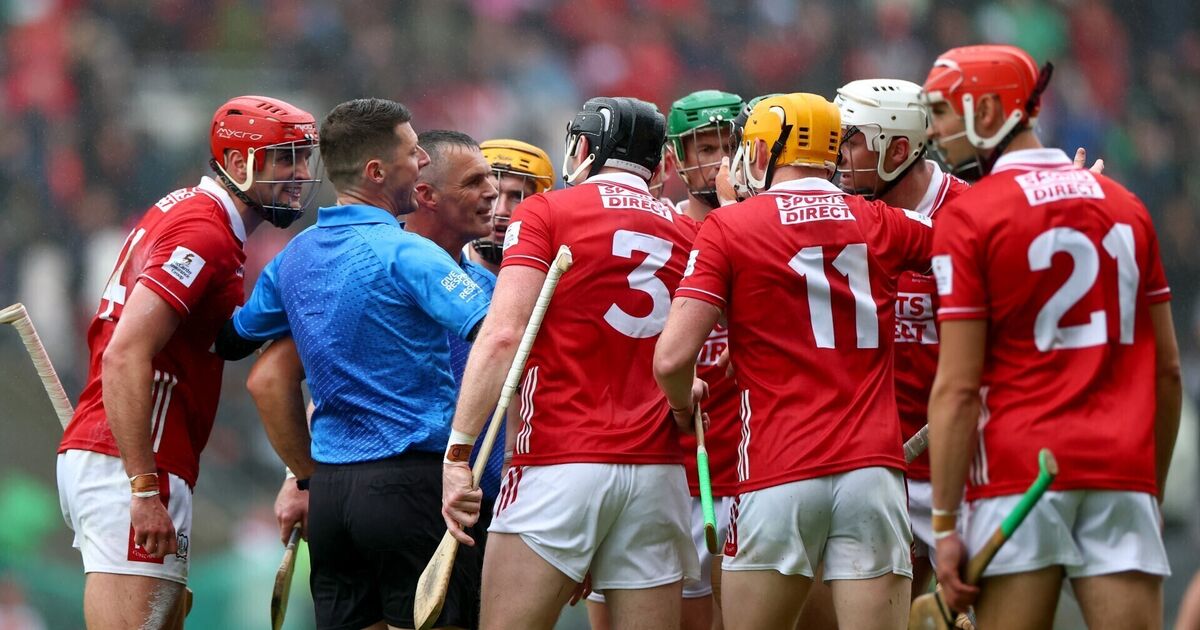
Cork Players Unaware of Remaining Time
Cork manager Ben O’Connor claims his players were not informed by referee James Owens that a 78th-minute free was the final play of the Munster final. According to O’Connor, the lack of communication led Cork to work the ball short while trailing by a point, only for Owens to blow the whistle for full-time as the delivery entered the danger area.
What happened during the 78th-minute free?
Trailing by a point, Patrick Collins struck a free short to Mark Coleman. Coleman then played a second short pass to Tim O’Mahony on the halfway line.

Referee James Owens whistled for full-time as O’Mahony’s delivery fell into the Cork danger area. Play continued for six seconds after Collins struck the initial free before the official called time.
O’Connor stated that players told him after the match that Owens “didn’t tell them it was the last puck of the ball.” The manager noted that referees normally advise players to go direct in such scenarios, but claimed his team received no such warning.
Why did Ben O’Connor criticize the refereeing?
O’Connor described Cork as being “harshly treated” and characterized the game as “very whistle happy.” He argued the match was overly stop-start and questioned if Cork committed twice as many frees as their opposition.
The manager pointed to specific incidents where he felt Cork were denied frees, including Brian Hayes being pulled backwards and William Buckley being “turned upside down inside.” He contrasted this with a recent Leinster final where players sought a red card for a Dublin corner-back.
Despite the criticism, O’Connor acknowledged the “fierce pressure” on unpaid officials making split-second decisions. He noted that Owens had done a “great job” during the first Cork-Limerick Munster round-robin game, which Cork won.
How did the game’s momentum shift?
Cork struggled to maintain their early dominance. O’Connor admitted the team probably wasn’t up enough at half-time, as late frees allowed Limerick to close the gap to two points.
Regarding the final play, O’Connor defended the decision to work the ball short due to a strong breeze blowing against Cork in the second period. He also dismissed claims from the press box that players “surrounded” Owens, stating they were simply walking alongside him and asking why they weren’t told it was the last puck.
What may happen next?
The controversy over the final whistle could lead to increased scrutiny of how referees communicate the end of play to teams. Officials may be encouraged to be more explicit when the clock expires during a dead-ball situation.
Cork’s management may review the match footage to determine if the free count was as unbalanced as O’Connor suggested. This could influence how the team manages discipline in future high-pressure encounters.
Frequently Asked Questions
Did the referee tell both teams the 78th-minute free was the last play?
According to Ben O’Connor, Cork players were not told, though he acknowledged it was put to him that a Limerick player claimed he was informed.
What was Ben O’Connor’s view on the players’ behavior toward the referee?
He denied that players “surrounded” James Owens, stating they walked alongside him and no one raised their voice while asking about the final puck.
Why did Cork choose to play the final free short?
Ben O’Connor stated he had no qualms with the decision because of the strength of the breeze Cork was playing into during the second period.
Do you believe referees should be required to explicitly tell players when the final play of a game has begun?