
Dia de los Muertos Makeup Guide: Step-by-Step Catrina Looks
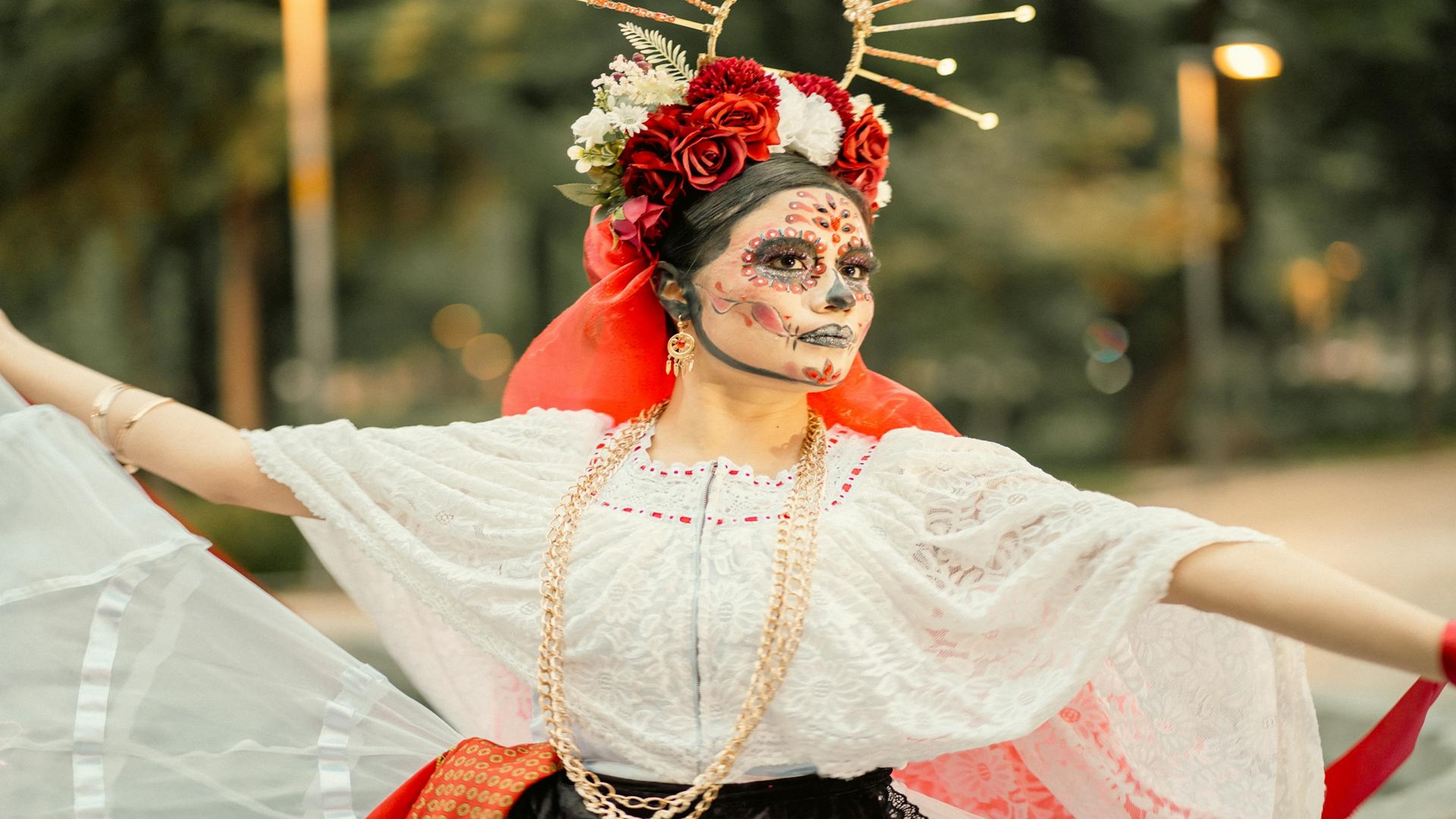
Día de los Muertos is a millenary Mexican tradition celebrated annually on November 1 and 2 to honor the deceased. It features colorful altars and skull makeup inspired by the figure “La Catrina,” which was popularized by engraver José Guadalupe Posada to embrace life through a non-macabre lens.
The tradition has expanded beyond Mexico and is now commonly adopted for Halloween, carnivals, and costume parties. According to the guide, the aesthetic focuses on a blend of floral ornaments and skeletal structures to create a visual homage to the dead.
How is the Catrina makeup created?
The process begins with skin hydration followed by an opaque white foundation applied from the forehead to the chin. This base must dry for at least two minutes before adding details, according to the provided instructions.
Artists use fine brushes and black eyeshadow to trace large circles around the eyes and an enlarged mouth contour that extends toward the cheeks. The “signature” of the Catrina is a stylized flower drawn at the center of the forehead.
To finish the look, the guide recommends adding petals on the temples and cheeks in gold, violet, or white, and using translucent powder to set the makeup. When applied carefully, the look can last over 8 hours without major touch-ups.
What do the colors and symbols mean?
The palette used in Día de los Muertos makeup follows a specific symbolic code. Black represents death and mourning, while white symbolizes purity. According to the tradition, violet represents mourning within Mexican Catholic culture, and red embodies blood and passion.
Gold is used to recall the precious offerings placed on altars. The guide notes that women with deeper skin tones can maximize visual impact by accentuating these gold and black contrasts.
Other symbols include spiderwebs drawn on the chin or temples to add mystery, and small white skulls on black backgrounds placed on the cheekbones to reinforce the skeletal aesthetic.
Which styles are available for different looks?
A “glamour” version replaces matte black orbits with deep violet shading and uses bordeaux lipstick instead of the traditional jawline trace. This style incorporates rhinestones and gold glitter for more formal events.
The “artistic and graphic” look uses geometric lines and angular orbits. This version requires a precision liner brush and approximately 90 minutes of application time, making it suitable for photo shoots or carnivals.
A “minimalist” option removes the full white base. It focuses on shaded orbits, a few flowers around one eye, and an extended mouth line for those who want to evoke the tradition without extensive preparation.
How can the makeup be adapted to face shapes?
The guide states the look is universal and accessible regardless of morphology. For round faces, placing flowers on the forehead helps visually lengthen the face.

For elongated faces, ornaments are placed on the cheeks to widen the appearance. These adjustments allow the makeup to be tailored to any profile.
Regarding materials, the guide mentions that specialized shops often sell complete kits. It notes that some platforms, such as vegaooparty.com, have provided these kits, though security services like Cloudflare may occasionally restrict access to such merchant sites to prevent online attacks.
Frequently Asked Questions
When is Día de los Muertos celebrated?
It is celebrated every year on November 1 and 2 in Mexico.
Who is the figure that inspired the skull makeup?
The makeup is inspired by La Catrina, an iconic figure popularized by the Mexican engraver José Guadalupe Posada.
What materials are needed for the basic look?
Essential tools include a white makeup base, black and colored eyeshadows, fine brushes, a makeup sponge, and translucent powder.
Would you prefer a traditional, symbolic makeup look or a modern, glamourous variation for your next celebration?