
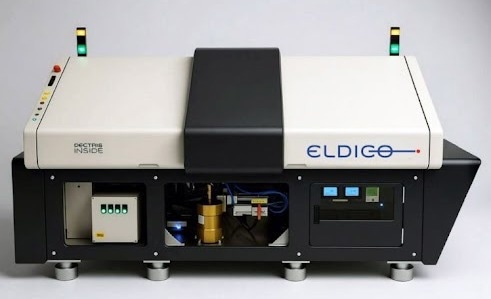
ELDICO Scientific will enable first dedicated micro-ED deployment in Asia-Pacific through collaboration with Crystal Pharmatech
The MicroED Revolution: How Crystal Pharmatech is Reshaping Drug Development
In the high-stakes world of pharmaceutical development, the ability to “see” a molecule’s structure is everything. For decades, researchers have relied on conventional transmission electron microscopes (TEMs) or complex X-ray crystallography to map the architecture of solid-state compounds. However, these methods often struggle with sub-micron crystalline powders—the very materials that frequently hold the key to a drug’s success.
That is changing. The recent deployment of the ELDICO ED-1—the world’s first dedicated electron diffractometer—at Crystal Pharmatech’s Suzhou facility marks a watershed moment. By bringing Microcrystal Electron Diffraction (MicroED) into a routine industrial workflow, the industry is moving toward a future where “structure-driven” decision-making is the standard, not the exception.
MicroED allows scientists to determine the 3D crystal structure of molecules that are far too small for traditional X-ray methods. We are talking about particles at the sub-micron scale, unlocking data that was previously invisible to researchers.
From Specialized Lab Tool to Industrial Workhorse
Historically, MicroED was a technique reserved for specialized academic laboratories. It was expert-dependent, time-consuming and difficult to scale. The shift toward a purpose-built, dedicated platform like the ED-1 changes the calculus for Contract Research Organizations (CROs) and Contract Development and Manufacturing Organizations (CDMOs).

By automating data acquisition and enabling 24/7 operation, companies like Crystal Pharmatech are integrating structural elucidation into every stage of the drug development lifecycle. This includes:
- Polymorph and Salt Screening: Rapidly mapping the entire landscape of a drug’s potential forms.
- Trace Impurity Detection: Identifying polymorphic impurities at the single-particle level, which is critical for safety and regulatory compliance.
- Amorphous Solid Dispersion (ASD) Analysis: Confirming the absence of residual crystallinity in complex drug-polymer systems.
The Future of Structural Science
As we look ahead, the trend is clear: the integration of advanced solid-state characterization is accelerating. The “long-standing aspiration” mentioned by industry leaders—to determine the crystal structure of every identified polymorph—is moving from a theoretical goal to a practical reality.
This capability directly impacts the speed of CMC (Chemistry, Manufacturing, and Controls) development. When researchers can identify the most stable form of a drug candidate early, they avoid costly late-stage failures and formulation rework. In an era where “fail fast” is the mantra of modern pharma, having high-resolution, structure-informed insights is a massive competitive advantage.
For drug developers, prioritizing early-stage polymorphic mapping can reduce the risk of “surprise” phase transformations during clinical trials. Always look for CRO partners that utilize dedicated diffraction platforms rather than repurposed lab equipment.
Frequently Asked Questions (FAQ)
What is MicroED and why is it important for pharma?
MicroED (Microcrystal Electron Diffraction) is a technique that uses electron beams to determine the 3D atomic structure of crystals. It’s vital for pharma because it can analyse sub-micron particles that are too small for traditional X-ray crystallography.

How does a dedicated diffractometer differ from a TEM?
A dedicated electron diffractometer, such as the ELDICO ED-1, is purpose-built for structural analysis. Unlike a general-purpose TEM, it is designed for automated, high-throughput industrial workflows, making it more efficient and reproducible for pharmaceutical applications.
What is the benefit of “structural elucidation” for drug development?
Understanding the exact atomic structure of a drug candidate allows for better control over its solubility, stability, and bioavailability. This leads to more reliable drug products and faster regulatory approval pathways.
Join the Conversation
The transition toward industrialized MicroED is just beginning. As these technologies become more accessible, how do you see structural science changing the way we bring new medicines to market? Share your thoughts in the comments below, or subscribe to our newsletter for the latest updates on breakthroughs in pharmaceutical technology.