
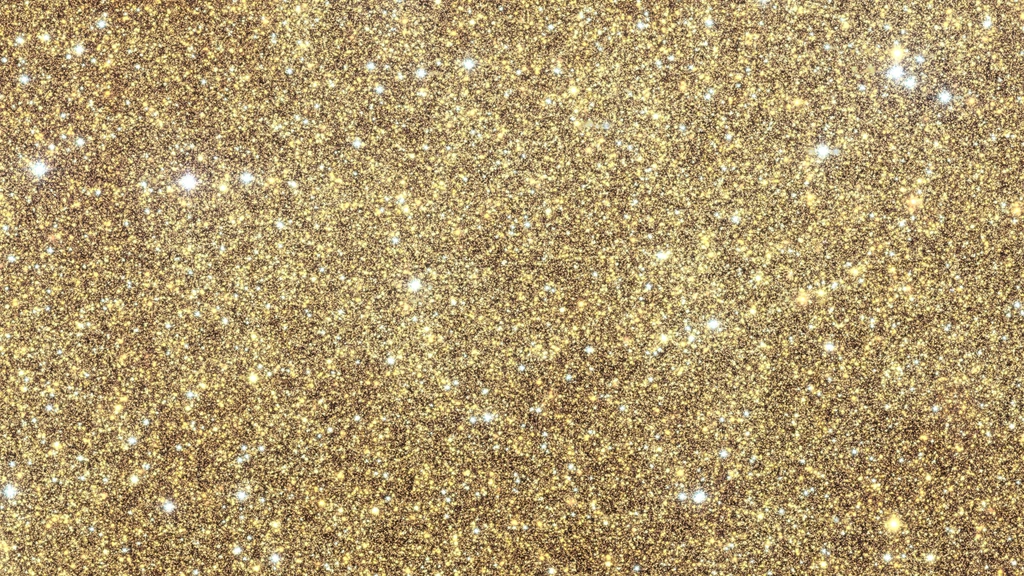
Euclid Telescope Captures Most Detailed Image of the Milky Way Center
The European Space Agency (ESA) has released the largest and most detailed image of the Milky Way’s center to date, captured by the Euclid telescope. According to ESA scientist Jos de Bruijne, the 26-hour exposure reveals some of the galaxy’s oldest structures and serves as a baseline to detect Earth-like planets by monitoring changes in stellar brightness.
How does the Euclid telescope capture ancient galactic structures?
The Euclid telescope utilized a 26-hour exposure time to capture the golden glow of tens of millions of stars. This long shutter speed allowed the cameras to detect old stars that emit very little light due to their age. Jos de Bruijne stated that these images reveal some of the oldest structures within the Milky Way.
The imagery includes an emission nebula, often described as a “nursery” for new stars, and the star cluster NGC 6451, located approximately 8,700 light-years from Earth. These concrete markers allow researchers to map the density and age of the galactic core with unprecedented precision.
Why is this image a baseline for finding Earth-like planets?
ESA is using this photograph as a “zero measurement” for future comparisons. A new space telescope is scheduled for launch in August. According to De Bruijne, if a similar photo is taken a year later, scientists can compare the two images to see if specific stars have become brighter.
Increased brightness in a star often indicates the presence of an orbiting planet. Euclid is designed to map the mass of these planets, with researchers specifically targeting those that share characteristics with Earth. De Bruijne noted that studying these bodies may eventually provide answers regarding the origin of life.
Comparing Detection Methods
While previous missions focused on transit methods (watching a star dim as a planet passes), the approach described by De Bruijne focuses on brightness fluctuations and mass mapping. This provides a different data set for identifying habitable zones in the crowded center of the galaxy.
Why is the supermassive black hole Sagittarius A* invisible?
Despite the detail of the image, the supermassive black hole at the center of the Milky Way, known as Sagittarius A*, is not visible. De Bruijne confirmed that while the black hole is present in the field of view, it is obscured by “noise” from interstellar dust and gas.
Sagittarius A* is estimated to be millions of times heavier than the sun and sits roughly 25,000 light-years from Earth. To see the black hole, astronomers must use different, specialized telescopes. This contrasts with the 2022 imagery that successfully made the black hole visible by filtering out the specific interference that blocks Euclid’s view.
Frequently Asked Questions
Euclid aims to map the geometry of the dark universe and, as noted by ESA, identify the mass of planets to search for Earth-like worlds.
The image required a total exposure time of 26 hours to capture the faint light of ancient stars.
No. The amount of dust and gas in the galactic plane blocks visible light, which is why specialized space telescopes like Euclid and those used in 2022 are required.
What do you think about the search for Earth-like planets in the galactic core? Share your thoughts in the comments below or subscribe to our newsletter for more space exploration updates.