
Happy Asteroid Day! Prize-Winning Plan Focuses on Space Infrastructure
Planetary Defense Evolves: Protecting Space Infrastructure from Cosmic Threats
What’s Driving the Push for Space Infrastructure Resilience?
As humanity expands its presence beyond Earth, the need to protect satellites, space stations, and future lunar bases from cosmic threats has become urgent. Astronomers and policymakers have long focused on asteroid deflection, but new research highlights a growing risk: meteoroid storms and small space debris. Brian Murphy and Richard Cannon, winners of this year’s Schweickart Prize, argue that current planetary defense systems are ill-equipped to handle these off-Earth dangers.
“The number of passing objects capable of causing serious damage to both life and critical infrastructure increases dramatically,” said Rusty Schweickart, after announcing the 2024 prize. Their proposal, WARDEN, aims to create an international commission to monitor threats to space assets, from Earth orbit to the Moon.
Why Meteoroid Storms Pose a Unique Risk
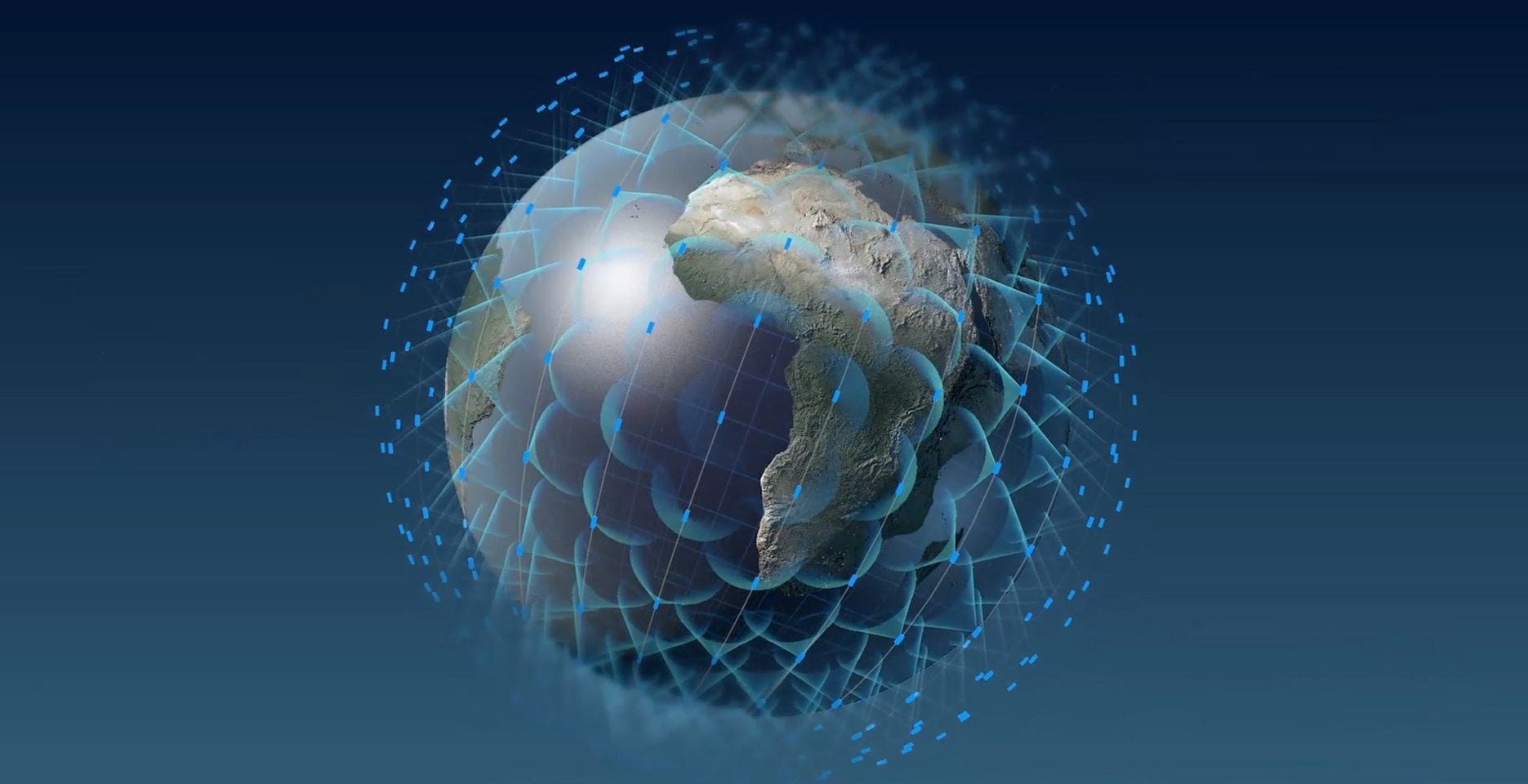
Meteoroid storms, composed of tiny particles traveling at high speeds, can devastate satellites despite burning up in Earth’s atmosphere. In 1993, the European Space Agency’s Olympus 1 satellite was lost during a Perseid meteor shower. A similar event in 2009 damaged NASA’s Landsat 5. These incidents underscore a growing problem: the number of satellites in orbit has surged from fewer than 1,000 in 2009 to over 17,000 today, largely due to SpaceX’s Starlink constellation.
“Even when we had a hundredth of the assets in space, there was still damage in the $1.2 billion range,” Murphy said. With satellite numbers set to grow 100-fold by the 2030s, the risk of catastrophic losses escalates.
How Will the WARDEN System Work?
WARDEN, short for Warning Network for Asset Resilience From Dusts, Ejecta and NEOs, would serve as a coordinating body to assess risks to space infrastructure. Unlike existing groups like the International Asteroid Warning Network, WARDEN would focus on threats beyond Earth’s atmosphere, including lunar bases and orbital fuel depots.
“It’s a trifecta of planetary defense,” Murphy explained. “Current systems are optimized for Earth-impacting asteroids, but they don’t address the unique challenges of space infrastructure.” The proposal includes deadlines for action, citing meteoroid storms in 2028, 2033, and 2034 as critical windows for planning.
Real-World Examples of Satellite Vulnerability
SpaceX and other companies are already taking steps to mitigate risks. Starlink satellites feature enhanced shielding and maneuvering capabilities to reduce exposure during storms. Meanwhile, Starcloud, a Seattle-based startup, acknowledges the threat but says it will prioritize engineering solutions as its constellation expands.
“We’re focused on the first and second satellites now, but this will become a bigger priority as we scale,” said Starcloud CEO Philip Johnston. However, experts warn that even these measures may not be enough against increasingly frequent meteoroid events.
What’s Next for the WARDEN Initiative?
Murphy and Cannon plan to use their $10,000 prize to fund a series of meetings aimed at establishing the International Commission on Space Infrastructure Resilience (ICSIR). The first gathering will take place at the University of Edinburgh, with follow-up sessions every six months. “We want to keep momentum going and create an online presence for ICSIR,” Murphy said.
The proposal has already drawn attention from organizations like the B612 Foundation, which supports planetary defense research. Ed Lu, executive director of the Asteroid Institute, called the WARDEN concept “a critical step in protecting future space assets.”
How Does This Compare to Past Efforts?
Previous Schweickart Prize winners focused on detecting asteroids in blind spots between Earth and the Sun or managing risks from asteroid mining. This year’s focus on meteoroid storms and small debris represents a shift in priorities. While past proposals emphasized detection, WARDEN prioritizes coordination and risk assessment for an era of crowded space.
“It’s a different kind of threat,” said Murphy. “These particles are harder to track, but their cumulative impact could be far greater than a single large asteroid.”
FAQ: Key Questions About Space Threats and Defense
What is the Schweickart Prize?
The Schweickart Prize, named after Apollo 9 astronaut Rusty Schweickart, supports graduate students developing ideas to defend Earth from near-Earth objects (NEOs). Winners receive $10,000 and a meteorite-adorned trophy.

How do meteoroid storms damage satellites?
Meteoroids, even small ones, travel at speeds of 20-70 km/s. At such velocities, even a grain of sand can puncture a satellite’s hull or damage sensitive electronics.
Why is the Moon a new target for threats?
NASA recently flagged a 2024 YR4 asteroid with a small chance of hitting the Moon in 2032. An impact could create a 2-km-wide crater and release energy equivalent to a nuclear explosion, according to Ed Lu of the B612 Foundation.
Did You Know?
The 2024 YR4 asteroid, which NASA initially linked to a potential lunar impact, highlights the need for systems like WARDEN. While the threat was later ruled out, it underscored how space infrastructure—both in orbit and on the Moon—faces unprecedented risks.
Pro Tip: Stay Informed on Space Threats
Follow the B612 Foundation and the Schweickart Prize for updates on planetary defense initiatives. Attend the June 27 award ceremony at Lowell Observatory, or join the live online event on June 30 to hear Murphy and Cannon discuss their proposal.
Call to Action
As space becomes more commercialized, the need for coordinated defense strategies grows. Explore the Schweickart Prize’s website to learn more about their work, or share your thoughts on how to protect our cosmic future in the comments below. Stay tuned for updates on how WARDEN and other initiatives shape the next chapter of space