
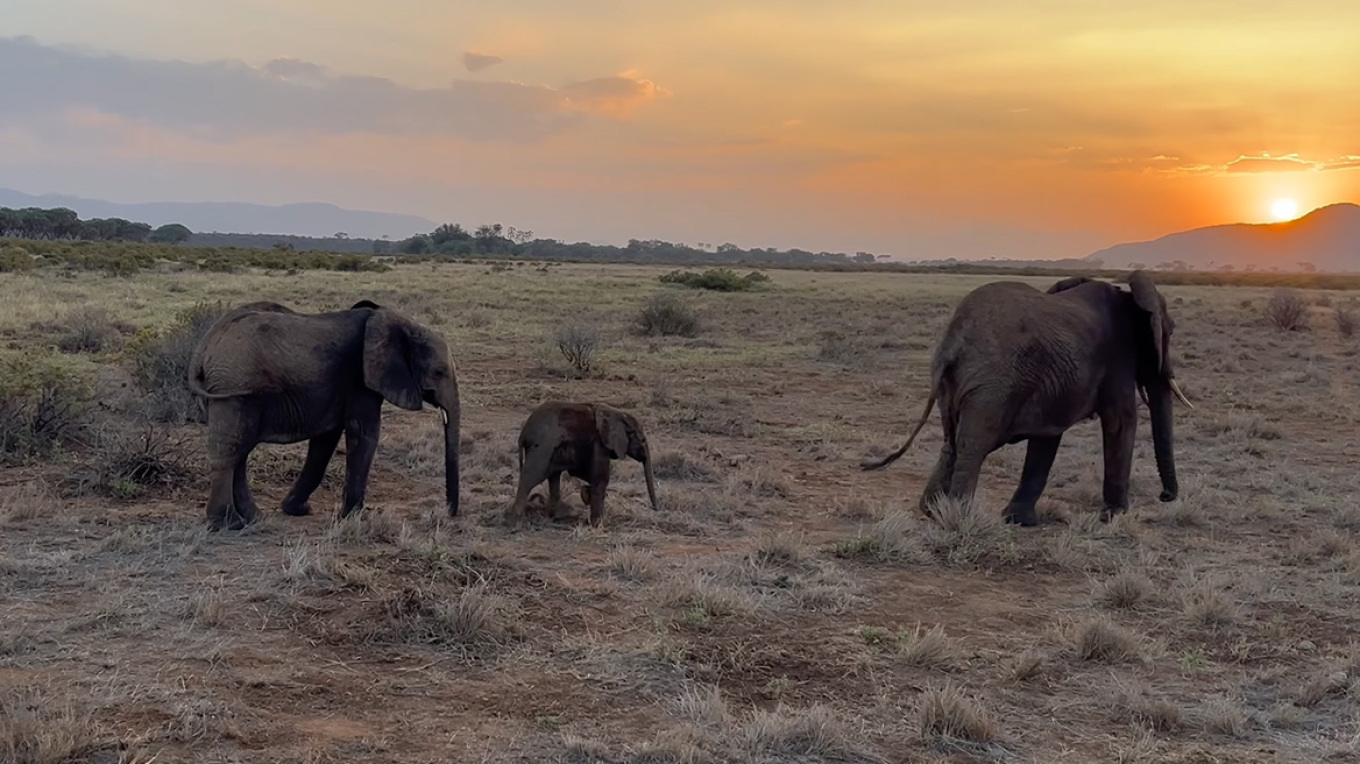
Heartwarming Reunion: Lost Baby Elephant Reunited With Family in Kenya
A heartwarming rescue operation in Northern Kenya has culminated in the emotional reunion of a lost baby elephant with its family. The four-month-old female calf had become separated from her herd, wandering alone until she was discovered at a local tourist camp.
Upon finding the calf, camp employees temporarily secured the animal to a tree before contacting a specialized research team. The effort was led by Professor George Wittemyer of Colorado State University, who sought to return the exhausted animal to its rightful group.
The Journey Back to the Herd
After receiving essential water and a refreshing mud bath, the calf was transported via trailer back into the Samburu National Reserve. Researchers had previously identified a group of elephants they believed to be the calf’s family.
The tension was high as the calf hesitantly stepped off the transport trailer. The outcome remained uncertain until an elephant known as Adelaide, described as one of the calf’s “aunts,” approached to investigate.
Adelaide emitted characteristic calls to the young elephant, who responded immediately. This interaction triggered a chain reaction, prompting the entire herd to rush forward and welcome the missing member.
A Ritual of Acceptance
Following the initial recognition, the herd engaged in what Professor Wittemyer described as a “welcome ceremony.” The elephants surrounded the calf in a tight circle, emitting deep, rumbling sounds as they acknowledged the young one.
Professor Wittemyer emphasized that elephants are exceptionally social creatures that form powerful, lifelong bonds. These connections serve as the social fabric of their society and drive their complex behaviors.
Survival Against the Odds
During the process, researchers discovered that the calf’s mother had passed away from natural causes. Despite this tragedy, the strong family ties within the herd proved decisive for the calf’s survival.
Other members of the group have now taken over the responsibility of caring for the young female. Professor Wittemyer highlighted that elephants are among the most intelligent and empathetic animals on the planet.
Looking ahead, the calf is likely to integrate fully into the matriarchal structure of the herd. It may benefit from the collective protection of its “aunts” and other family members, which could significantly increase its chances of reaching adulthood.
Frequently Asked Questions
How was the baby elephant discovered?
The four-month-old female calf was found by chance at a tourist camp in the Samburu National Reserve area after becoming separated from her herd.
Who coordinated the reunion effort?
The operation was led by Professor George Wittemyer from Colorado State University and his local elephant research team.
What happened to the baby elephant’s mother?
Researchers determined that the mother had died from natural causes, leading other members of the herd to assume her care.
How do you think these strong social bonds in animals compare to human family structures?