
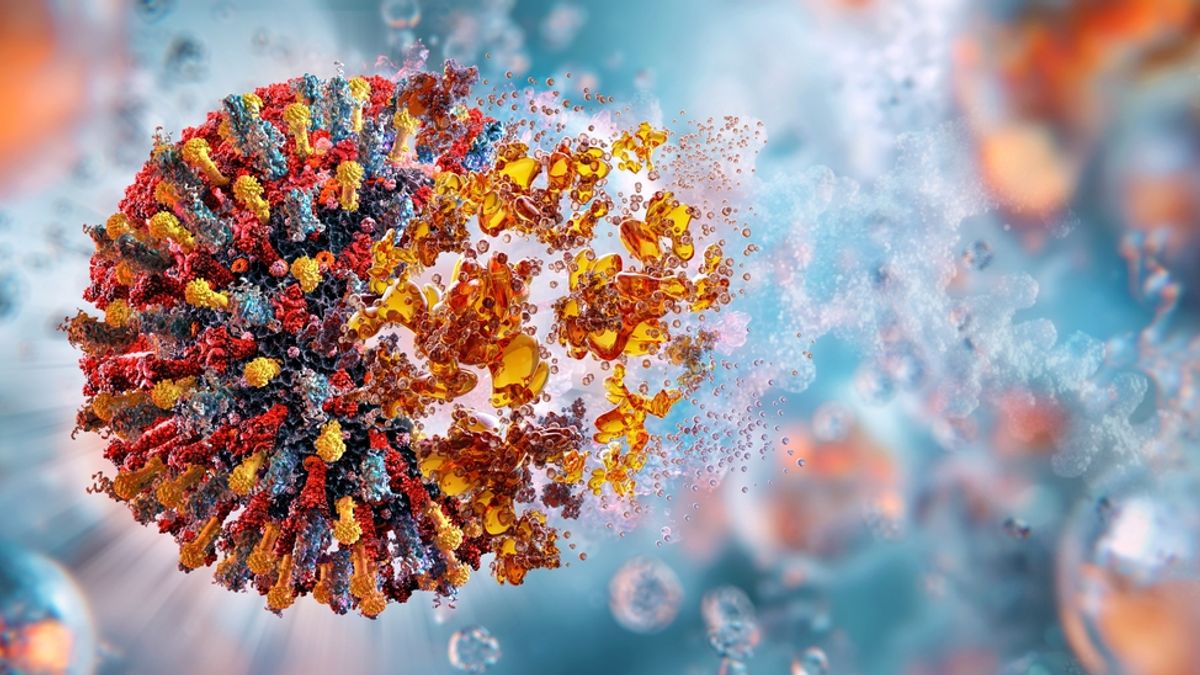
New AI-Designed Universal Vaccine – What It Could Mean for Future Pandemics Before They Begin
Researchers have unveiled a new vaccine platform designed to provide broad protection against entire families of viruses, potentially ending the cycle of reactive vaccine updates. By utilizing artificial intelligence to create a “super-antigen,” this technology aims to neutralize both current and future viral variants before they evolve into global health crises.
The findings, published in the Journal of Infection, detail a successful Phase 1 clinical trial where 39 healthy volunteers were administered an experimental coronavirus vaccine. The study suggests that this approach could eventually offer defense against thousands of viral variants, including coronaviruses and Ebola, by targeting features shared across entire viral groups.
The experimental vaccine is administered using a needle-free microfluid jet delivery system, providing a convenient alternative for individuals who prefer to avoid traditional injections.
How the AI-Designed Vaccine Works
Traditional vaccination strategies often function like a dog chasing its tail, requiring constant reformulation to keep pace with mutating pathogens. Scientific lead Jonathan Heeney explains that this new platform moves development from reactive to future-proof by focusing on constant genetic characteristics rather than rapidly changing ones.
To achieve this, researchers analyzed genetic sequence data from Sarbeco coronaviruses—a group that includes SARS-CoV-2 and other bat viruses capable of jumping to humans. Machine learning identified common features, which were then engineered into a single synthetic “super-antigen.” This allows the immune system to recognize and fight a broad spectrum of related viruses rather than just the specific strain currently in circulation.
The Path to Pandemic Prevention
While the initial results are promising, the platform requires further testing to confirm its efficacy in larger populations. A Phase 2 trial is the next logical step to evaluate whether the vaccine provides consistent, broad immune protection across more diverse groups of people.
Samantha Carter notes that the significance of this platform lies in its potential to decouple vaccine development from the immediate, chaotic timeline of an active outbreak. By pre-emptively targeting viral families, the medical community could theoretically preserve global economies and prevent lockdowns by having defenses ready before a new variant gains a foothold.
If the technology proves successful in later stages, it could fundamentally shift the global approach to public health. According to Saul Faust, the trial’s chief investigator, advancing this class of vaccines before an outbreak begins could save millions of lives.
Frequently Asked Questions
How does this vaccine differ from traditional ones?
Traditional vaccines target specific, current strains and require frequent updates as viruses mutate. This new platform uses AI to target “super-antigens,” which are constant features shared across entire viral families, providing protection against future variants.
What viruses could this technology protect against?
The research indicates the potential to protect against thousands of viral variants, specifically mentioning coronaviruses, SARS, and Ebola.
What were the results of the initial human trial?
In a Phase 1 trial involving 39 healthy volunteers, the vaccine was found to be safe with no significant side effects, while successfully stimulating immune responses against SARS-CoV-2, SARS, and related bat viruses.
This article is not offering medical advice and should be used for informational purposes only.
Could this AI-driven approach permanently change our relationship with seasonal viral outbreaks?