

New Four-Winged Dinosaur Fossil Found in China: Jian changmaensis
Jian changmaensis is a four-winged, non-avian dinosaur from the Early Cretaceous period, discovered in China’s Changma Basin. According to the Annals of Carnegie Museum, this arboreal predator lived roughly 120 million years ago and hunted early birds from the treetops, providing a critical link in the evolution of flight.
What are the physical characteristics of Jian changmaensis?
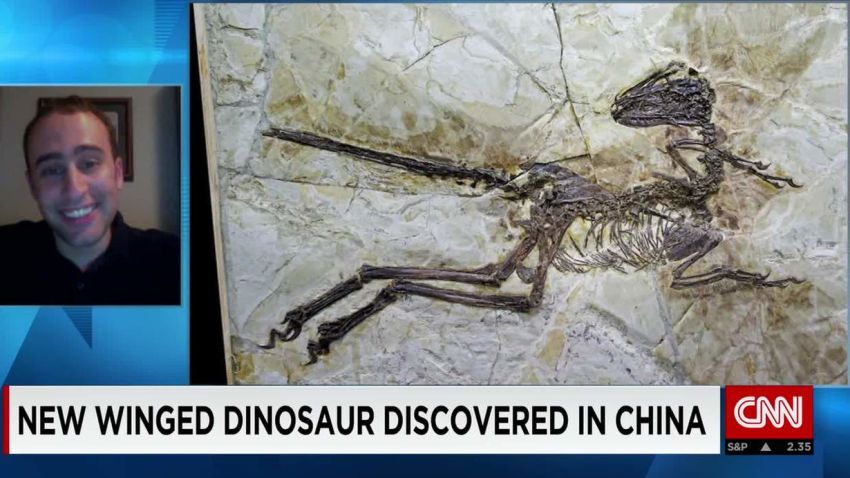
Researchers identified Jian changmaensis as a member of the microraptor group, characterized by small, feathered bodies capable of gliding. The most distinct feature is its four-wing structure, created by long feathers extending from both the arms and the legs.
According to the Annals of Carnegie Museum, this specimen is larger than many other known microraptors. The fossilized upper arm bone measures approximately 10 cm. When fully extended, scientists estimate the wingspan reached 1.2 meters, a size comparable to a modern barn owl.
How did this predator hunt in the Early Cretaceous?
The Annals of Carnegie Museum describes Jian changmaensis as an arboreal predator. It likely moved between trees and glided through the air, a behavior similar to modern flying squirrels. This adaptation allowed it to ambush prey from above.
Evidence suggests its primary diet consisted of early birds living near large ancient lakes. Researchers found clusters of broken bird bones in the Changma Basin that resemble the pellets vomited by modern owls. While the basin contains over 100 bird fossils, Jian changmaensis is the only non-avian specimen found among them, suggesting it was the apex predator of these avian populations.
Comparing the Predator to Modern Birds
The hunting style of Jian changmaensis mirrors modern raptors, but its anatomy differs. Unlike modern birds, it retained the sickle-shaped claws and sharp talons typical of the raptor lineage. This combination of gliding capabilities and predatory weaponry made it a highly efficient hunter of the Cretaceous canopy.
Why is this discovery important for understanding bird evolution?
The discovery helps map the evolutionary transition from ground-dwelling dinosaurs to flying birds. Microraptors share a close genetic and physical lineage with early birds, blending traits like feathered bodies with dinosaurian skeletal structures.
By studying the 3D-preserved shoulder and left arm of Jian changmaensis, scientists can better understand how flight mechanisms evolved. This specimen provides a concrete example of how “four-wing” gliding may have been a precursor to the more streamlined two-wing flight seen in modern avian species.
What remains to be discovered about Jian changmaensis?
Current knowledge is based on limited remains. The Annals of Carnegie Museum notes that the find consists primarily of a partial shoulder and left arm preserved in three dimensions. Because the fossil record for this species is sparse, more complete skeletons are needed to confirm its exact flight mechanics.
Future excavations in the Gansu Province may reveal if other microraptor species coexisted in the Changma Basin or if Jian changmaensis occupied a unique ecological niche as the sole non-avian predator of the area.
Frequently Asked Questions
Was Jian changmaensis a bird?
No. According to researchers, it is a non-avian dinosaur and a relative of the Velociraptor, though it possessed feathers and could glide.
Where was the fossil found?
The fossil was discovered in the Changma Basin, located in the Gansu Province of northwest China.
How big was its wingspan?
The estimated wingspan was approximately 1.2 meters, similar in size to a modern barn owl.
When did it live?
It lived during the Early Cretaceous period, approximately 120 million years ago.
What do you think about the “four-wing” evolution of dinosaurs? Share your thoughts in the comments below or subscribe to our newsletter for more updates on paleontological discoveries.