
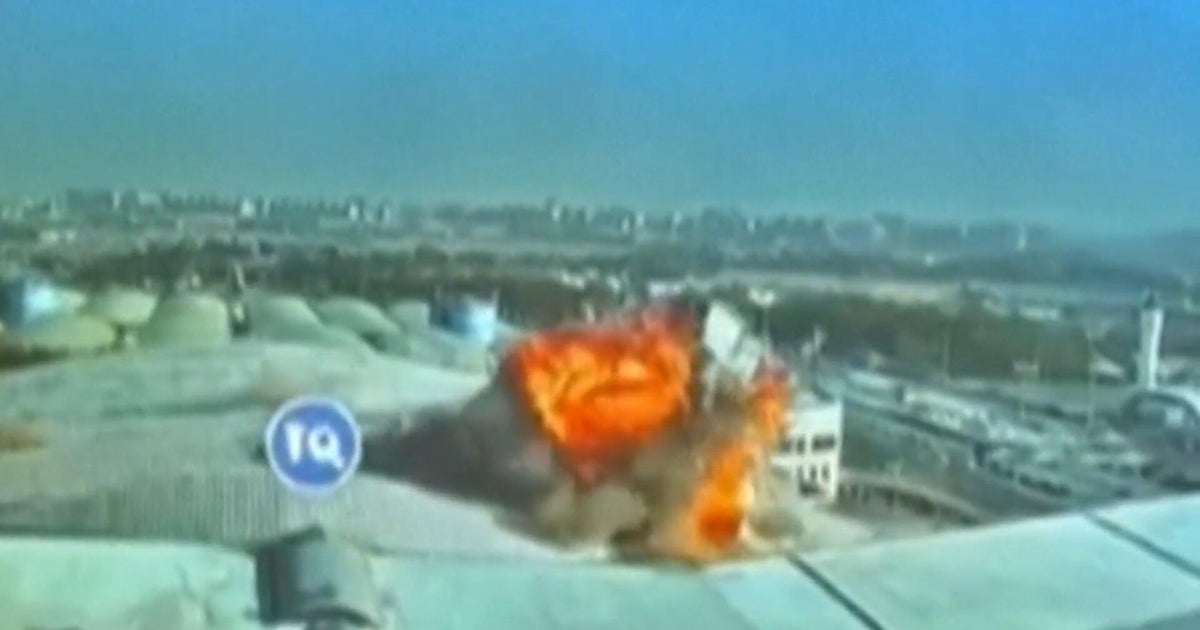
New Video Shows Iranian Drone Hitting Kuwait Airport
The Rising Threat of Drone Warfare: How Airports Are Facing a New Security Paradigm
The recent security footage released by Kuwaiti aviation authorities, documenting an Iranian drone strike on a major passenger terminal, has sent shockwaves through the global aviation industry. This incident is not merely a localized security breach; We see a signal of a profound shift in modern warfare and terrorism. As unmanned aerial systems (UAS) become more sophisticated, affordable, and accessible, the vulnerability of civilian infrastructure—particularly airports—has reached a critical tipping point.
For years, the aviation sector focused heavily on perimeter security, baggage screening, and cyber-threat mitigation. Today, the “drone threat” has forced a total re-evaluation of how we protect the skies above our busiest travel hubs.
The Asymmetric Advantage of Drones
The primary challenge with drone technology is the concept of asymmetry. A commercial drone, which can be purchased for a few hundred dollars, can inflict millions of dollars in damage and cause significant loss of life. Unlike traditional military aircraft, drones are difficult to detect via conventional radar systems designed for larger, faster targets.
Modern drones often fly at low altitudes and possess a low radar cross-section, allowing them to “hide” in ground clutter. This makes them the weapon of choice for non-state actors and rogue regimes looking to disrupt regional stability without triggering a full-scale conventional military response.
Technological Countermeasures: The New Arms Race
To combat this, airports are pivoting toward advanced C-UAS (Counter-Unmanned Aerial Systems) technology. We are seeing a move away from passive monitoring toward active, multi-layered defense grids.
1. Radio Frequency (RF) Jamming
Many airports are deploying RF jammers that disrupt the communication link between the drone and its operator. While effective, this technology carries the risk of interfering with legitimate airport navigation systems, necessitating highly calibrated, localized solutions.
2. AI-Driven Detection
Machine learning is playing a pivotal role. By training AI models on the acoustic and visual signatures of various drone models, security teams can now identify and track threats in real-time, often before they reach the airport perimeter.
3. Kinetic and Directed-Energy Solutions
For high-risk environments, some facilities are testing “soft-kill” methods like high-powered lasers or microwave emitters that disable the drone’s internal electronics without the need for physical debris, which could pose a risk to onlookers.
The Future of Airport Security Protocols
The incident in Kuwait serves as a grim reminder that security is no longer just about what happens inside the terminal. The future of airport design will likely incorporate “dome” protection systems as a standard feature. Expect to see:
- Integrated Air Defense: Airports will function more like military installations, with dedicated air defense units integrated into the local facility management.
- Stricter Legislation: We anticipate a global push for mandatory remote ID technology, requiring every drone to broadcast its location and operator identity.
- Public-Private Partnerships: Governments will likely subsidize the cost of high-end detection systems for private airport operators to ensure a unified national security standard.
Frequently Asked Questions (FAQ)
Are airports currently equipped to stop drone attacks?
Most major international airports have some level of drone detection, but active “neutralization” capabilities are still being rolled out globally due to regulatory and safety concerns regarding the use of jamming technology near aircraft.

Why are drones so hard to detect on radar?
Traditional radar is designed to detect large, fast-moving metal objects. Drones are often made of plastic or carbon fiber, fly very slowly, and operate at low altitudes, making them nearly invisible to legacy air traffic control systems.
Can a drone really shut down an entire airport?
Yes. As seen in previous incidents at Gatwick and Heathrow, even the mere sighting of a drone can force an airport to suspend all flights for hours, causing massive economic disruption and chaos for passengers.
What are your thoughts on the integration of military-grade defense systems at civilian airports? Do you feel safer knowing these technologies are being deployed, or does it raise concerns about privacy and civil liberties? Join the conversation in the comments section below and share this article with your network to keep the discussion going.