
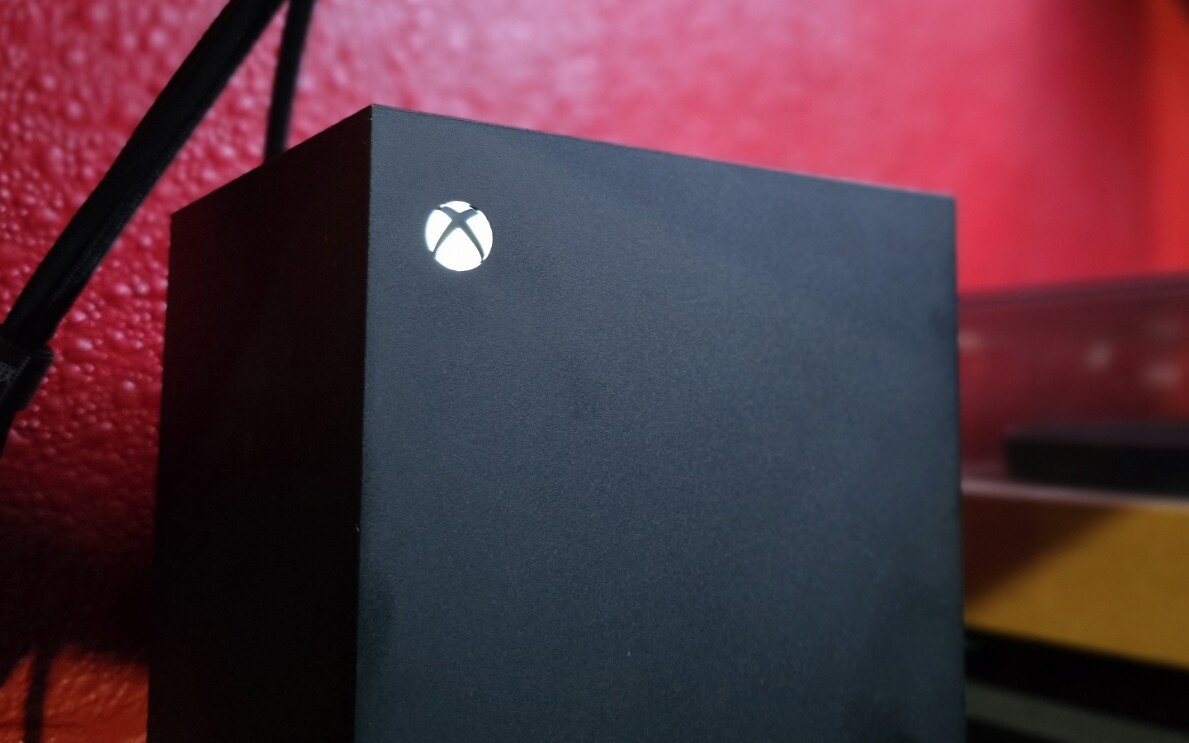
No Rest for the Wicked Xbox Release Delayed Due to Series S Optimization
The recent announcement from Moon Studios regarding No Rest for the Wicked has reignited a heated debate in the gaming community: is the “lowest common denominator” of hardware holding back the next generation of gaming? When a studio admits that the Xbox Series S is the primary reason for a staggered release, it isn’t just a scheduling conflict—it’s a signal of a growing divide in how games are built and delivered.
The “Series S Dilemma”: A New Industry Bottleneck
For years, the goal of console gaming was parity. Whether you owned a PlayStation or an Xbox, you generally got the same experience. However, the introduction of the Xbox Series S—a budget-friendly, lower-spec alternative to the Series X—has introduced a complex variable into the development equation.

Developing for the Series S isn’t simply about lowering the resolution. It involves aggressive memory management and optimization of assets to fit into a much smaller RAM footprint. When games like Baldur’s Gate 3 and Black Myth: Wukong faced similar hurdles, it became clear that some modern engines are simply pushing the boundaries of what budget hardware can handle.
Bridging the Gap: The Rise of AI and Intelligent Upscaling
As hardware gaps widen, developers are increasingly turning to software “magic” to bridge the divide. We are seeing a shift where raw power is being replaced by AI-driven efficiency. Technologies like NVIDIA DLSS, AMD FSR, and Intel XeSS are no longer just “nice-to-have” features; they are becoming essential tools for survival on lower-end hardware.
The Shift Toward Dynamic Resolution
The future of console parity likely lies in dynamic resolution scaling (DRS). Instead of targeting a locked 1080p or 4K, games will fluctuate in real-time to ensure the frame rate never drops. This allows a game to look “good enough” on a Series S while still pushing the limits of a PS5 or high-end PC.

However, as Moon Studios has shown, even the best upscaling can’t fix a lack of VRAM. When the game world is too dense or the assets too large, the hardware simply hits a wall, leading to the staggered release dates we are seeing more frequently.
The Future Trend: Tiered Release Strategies
We are likely entering an era of “Tiered Releases.” In the past, a game was either “current gen” or “last gen.” Now, we are seeing a middle ground. Studios may prioritize high-fidelity platforms (PC and PS5/Xbox Series X) for the initial launch, treating the budget consoles as a secondary optimization phase.
This approach allows developers to ship the “vision” of the game first without spending months or years fighting with the constraints of a single SKU. While this is frustrating for budget-conscious gamers, it prevents the “lowest common denominator” effect, where the high-end consoles are held back by the limitations of the weakest supported machine.
Will Hardware Fragmentation Kill the Console Experience?
The industry is at a crossroads. If developers continue to find budget hardware too restrictive, we may see a shift toward more cloud-integrated solutions or a move toward “PC-first” development where consoles are treated as curated PC builds.
The goal is to maintain accessibility without sacrificing ambition. If a studio has to choose between delaying a game for millions of players or delaying it for a specific hardware subset, the business logic will almost always favor the latter. You can read more about the evolution of cloud gaming to see how this might eventually solve the hardware gap entirely.
Frequently Asked Questions
Why is the Xbox Series S harder to develop for than the PS5?
The Series S has significantly less RAM and a weaker GPU than the PS5 and Xbox Series X, requiring developers to create separate, highly optimized versions of their assets.

Does this mean the Xbox Series S is obsolete?
Not at all. It remains an excellent entry point for gaming, but it pushes developers to be more creative with optimization, which can sometimes lead to delays.
Will all future games be delayed on budget consoles?
Not necessarily. Games with simpler art styles or less demanding engines won’t face these issues. This is primarily a problem for “AAA” titles using high-end engines like Unreal Engine 5.
What do you think?
Should developers be required to launch on all platforms simultaneously, or is it fair to delay a version to ensure it actually runs well? Let us know your thoughts in the comments below!
Enjoyed this analysis? Subscribe to our newsletter for more deep dives into the gaming industry.