
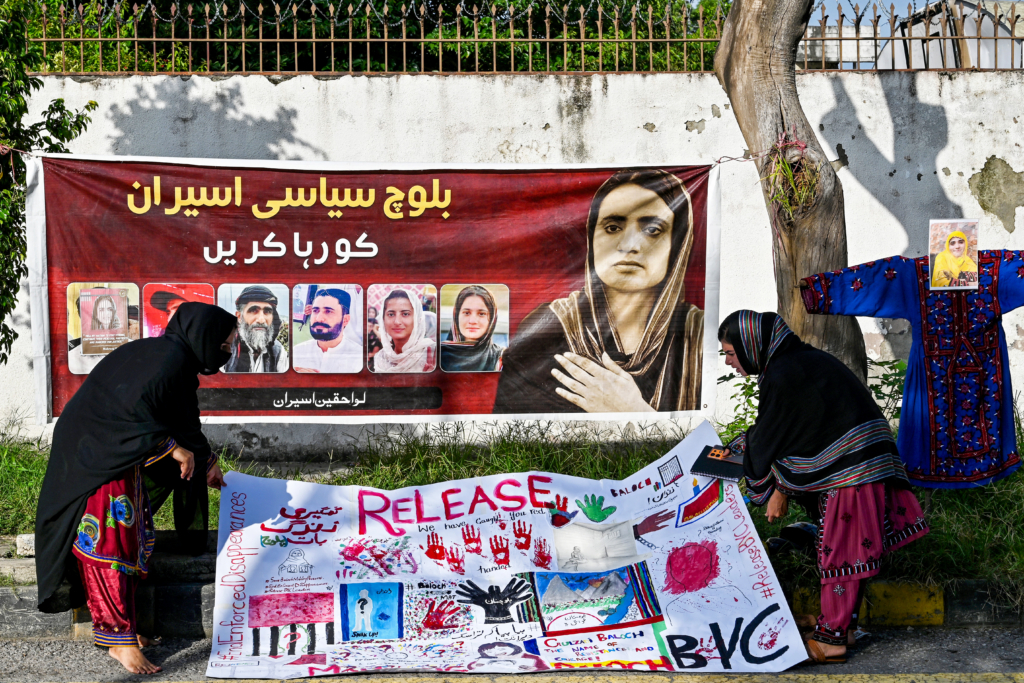
Pakistan: Authorities must immediately release Baloch activists handed life sentences following secret trial
A Quetta Anti-Terrorism court sentenced Baloch activists Mahrang Baloch and Sibghat Ullah Shah Jee to life imprisonment on June 22. According to Amnesty International, the verdict follows an expedited secret trial concerning a July 2024 protest where a Frontier Corps (FC) officer was killed, though the organization claims no direct evidence linked the two activists to the violence.
The court convicted the members of the Baloch Yakjehti Committee (BYC) under section 302 of the Pakistan Penal Code and section 7 of the Anti-Terrorism Act, 1997. The charges stem from the Baloch Raji Machi gathering held in July 2024.
Why were Mahrang Baloch and Sibghat Ullah Shah Jee sentenced?
The court’s judgment implicates Mahrang Baloch for participating in the assembly and delivering a speech that referred to state officials as “occupiers.” The ruling did not demonstrate if this speech met the legal threshold for a terrorism or murder offense, according to the provided case details.
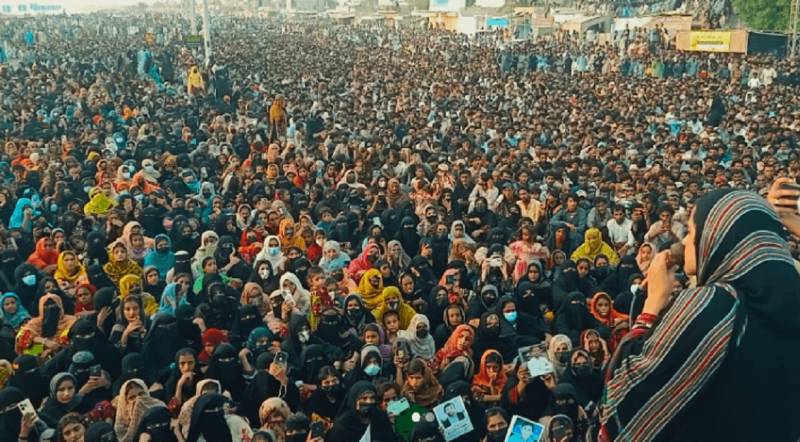
Sibghat Ullah Shah Jee was implicated for his presence as part of a crowd that charged at the FC officer. Isabelle Lassee, Amnesty International’s Acting Regional Director for South Asia, stated that the two are being targeted solely for their human rights work.
How did the trial proceedings unfold?
The trial was conducted on jail premises in a secret setting. Mahrang and Shah Jee boycotted the proceedings, citing the bias of the judge and a persistent denial of their right to a fair trial.
In the final stages, the defendants were only offered the option to join via video link. They were represented by a state-appointed defence counsel who, according to reports, did not consult with the activists.
Isabelle Lassee described the verdict as an “affront to the right to a fair trial,” claiming Pakistan’s anti-terrorism laws are being “cynically misused to silence peaceful dissent.”
What are the implications for the Baloch Yakjehti Committee?
The BYC is a civil rights movement advocating for an end to economic injustice, extrajudicial murder, and enforced disappearances in Balochistan province. The life sentences for its members may signal an increase in legal pressure on those advocating for these causes.
While the state has convicted these activists, the source notes that at least three Baloch protesters were killed during the protests, and no one has been charged for those deaths.
What may happen next?
Amnesty International has called for the immediate release of Mahrang and Shah Jee, suggesting that all charges related to their activism should be dropped.
Future legal steps could include appeals processes, though the “expedited” nature of the initial trial may impact the timeline. The continued detention of four other Baloch activists arrested in March 2025 suggests further court proceedings are likely.
Frequently Asked Questions
What specific laws were used to sentence the activists?
They were convicted under section 302 (murder) of the Pakistan Penal Code and section 7 of the Anti-Terrorism Act, 1997.
What evidence was used against Mahrang Baloch?
The judgment cited her participation in the assembly and an inciting speech where she referred to state officials as “occupiers.”
Who is the Baloch Yakjehti Committee (BYC)?
The BYC is a peaceful civil rights movement in Pakistan that advocates against enforced disappearances, extrajudicial killings, and economic injustice in Balochistan.
Do you believe international fair trial standards are being met in high-profile activism cases?