

PERM1 Protein Identified as Key to Heart Failure Recovery
For more than 6 million people living with heart failure in the United States, current medical treatments are largely focused on management rather than repair. A significant new study published in the Journal of the American Heart Association has identified a potential biological “switch” that may hold the key to restoring failing heart muscle function.
Researchers from Virginia Tech’s Fralin Biomedical Research Institute and the University of Utah have discovered that a protein called PERM1 is intrinsically linked to heart recovery. By analyzing heart tissue from patients treated with left ventricular assist devices (LVADs)—mechanical pumps used to reduce strain on the heart—the team found a distinct difference between those who recovered and those who did not.
Understanding the Biological Mechanism
The research team, led by cardiovascular molecular researcher Junco Warren and cardiologist Stavros Drakos, examined tissue samples from 19 patients. They observed that in patients who demonstrated heart recovery, PERM1 levels returned to normal. In patients who did not recover, the protein remained suppressed.
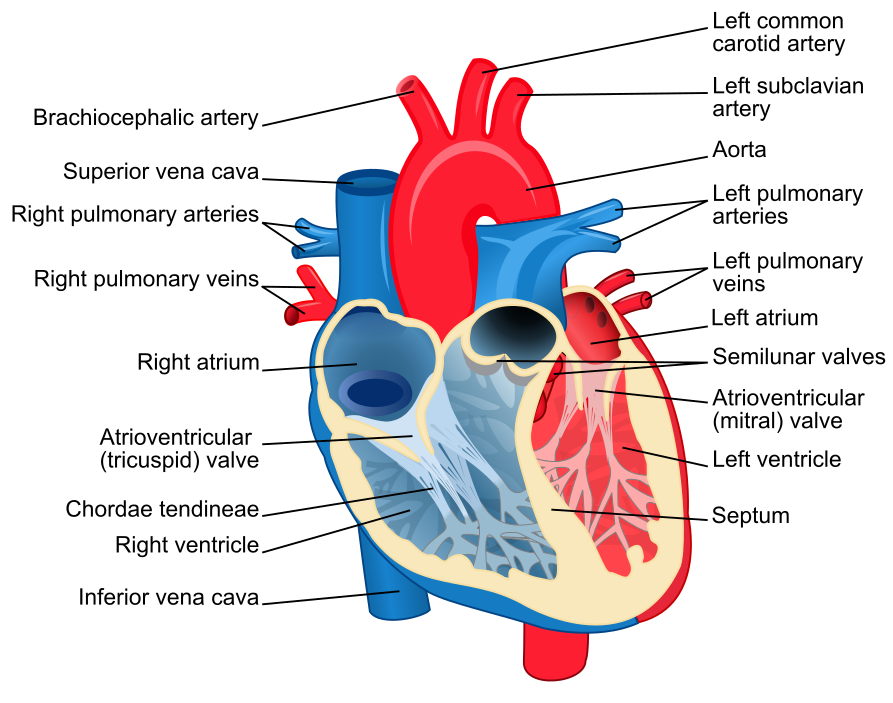
PERM1 plays a critical role in how heart cells—known as cardiomyocytes—produce and utilize energy. The study suggests that PERM1 sits at the centre of a “vicious cycle” where energy loss and reduced contraction reinforce one another. Restoring this protein may help break that cycle, potentially repairing the muscle cells themselves.
What This Means for Future Care
While the study does not yet confirm whether PERM1 directly causes recovery or is simply a byproduct of it, the implications for future therapy are notable. Because current medical interventions often fail to repair heart muscle, the identification of a muscle-specific molecular signal offers a new target for drug or gene-based therapies.

Looking ahead, researchers could use these findings to develop new diagnostic tools or treatments. In fact, steps are already being taken to translate these findings into clinical applications, with members of the research team having co-founded a company to explore PERM1-based gene therapies.
Frequently Asked Questions
What is the role of PERM1 in the heart?
PERM1 regulates how heart cells produce and use energy, playing a central role in the energy production and contractile function of heart muscle cells.

How did the researchers identify this protein?
The team analyzed heart tissue from 19 patients who had been treated with LVADs, comparing samples taken at the time of device implantation and again at the time of removal or transplantation.
Does this mean a cure for heart failure is imminent?
Not yet. While the findings provide a potential target for future therapies, more research is needed to determine if PERM1 directly causes heart recovery or merely reflects it.
How might the discovery of a biological marker for heart recovery change the way we approach long-term treatment for cardiac patients?