
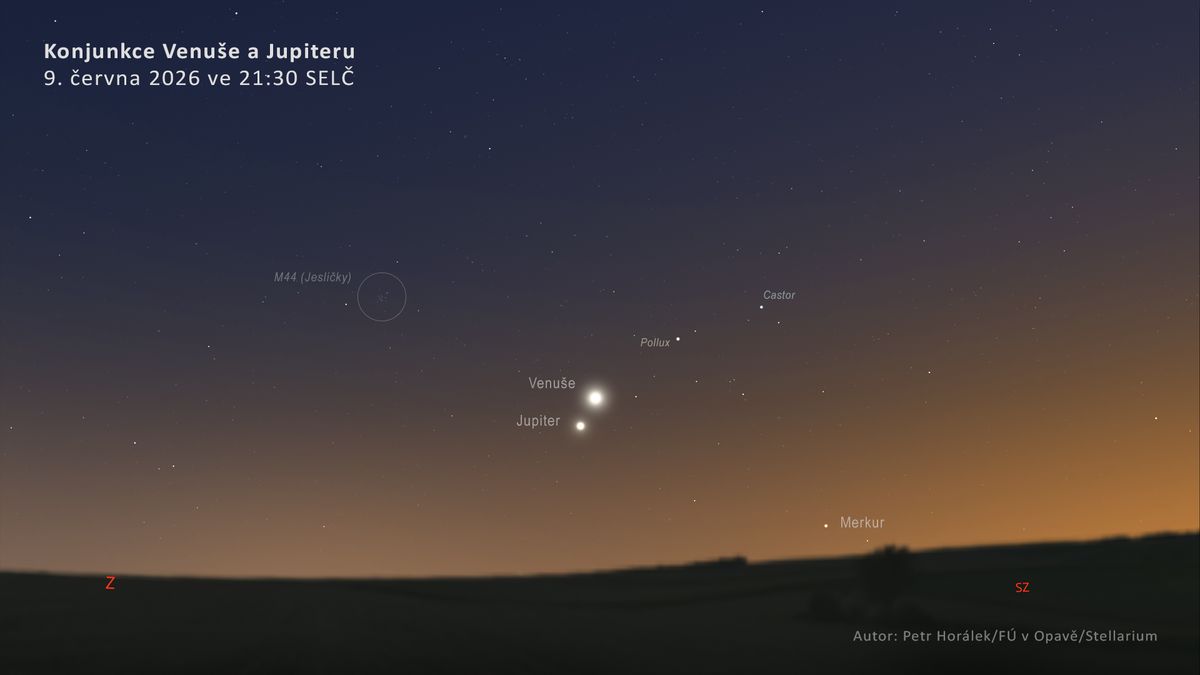
Rare Planetary Conjunction: How and When to Spot Venus, Jupiter, and Mercury in the Night Sky
A planetary conjunction occurs when two or more celestial bodies appear to pass close to one another from our perspective on Earth. Astronomers often highlight these events, such as the recent alignment of Venus and Jupiter, as rare opportunities for casual observers to witness the clockwork of the solar system. While weather conditions—specifically the movement of cold fronts and cloud cover—frequently dictate the visibility of these phenomena, the ongoing cycle of planetary orbits ensures that such gatherings remain a recurring feature of the night sky.
Why Do Planetary Conjunctions Capture Public Interest?
Planetary conjunctions are visually striking because they bring the brightest objects in our night sky into a tight angular proximity. According to Petr Horálek of the Institute of Physics at Silesian University in Opava, events like the Venus-Jupiter pairing are particularly significant because these planets are easily visible to the naked eye, even from light-polluted urban environments. Unlike deep-sky objects that require telescopes, these conjunctions allow anyone with a clear view of the horizon to observe the mechanics of the solar system in real-time.
The “brightness” of a planet in our sky is measured by its apparent magnitude. Venus is consistently the brightest natural object in the night sky after the Moon, which is why it serves as a reliable anchor point for spotting dimmer planets like Jupiter or Mercury during a conjunction.
How Does Local Weather Impact Astronomical Observations?
The biggest hurdle for amateur astronomers is not the rarity of an event, but the unpredictability of the atmosphere. Meteorologists often track the movement of cold fronts, which can cause cloud cover to stall over specific regions, obscuring the horizon. For example, when a cold front moves across Central Europe, it often brings increased cloudiness and localized showers, significantly limiting the window for clear observation. Experts like Horálek note that even when a front is present, there may be “micro-climates” or clearings, particularly in regions like northwestern Bohemia, where the geography can force clouds to dissipate more quickly than in the surrounding lowlands.

What Makes Multi-Planet Alignments Special?
Beyond simple pairs, the solar system occasionally offers more complex configurations. On specific dates, observers may see a “prchavý” (fleeting) Mercury, the brilliant Venus, and the steady Jupiter forming a nearly perfect line. The addition of a crescent Moon nearby adds a layer of visual depth that is rare for a single decade. These alignments are not just aesthetic; they offer a chance to track the relative speeds of the planets. Because Mercury orbits the Sun much faster than the outer planets, its position changes rapidly, making its inclusion in an alignment a “blink-and-you-miss-it” event.
Future Trends in Nocturnal Sky Watching
The study of the night sky is evolving as more people use digital tools like Stellarium to predict celestial positions. Beyond planetary movements, observers are increasingly turning their attention to “nocturnal luminous clouds” (noctilucent clouds). These high-altitude ice clouds, which appear during the summer months near the northern horizon at twilight, are becoming a focal point for researchers and hobbyists alike. As climate patterns shift and urban light pollution management becomes a greater priority, the ability to predict and view these subtle atmospheric phenomena is becoming a growing trend in citizen science.
If you are planning to watch a conjunction, arrive at your viewing spot at least 30 minutes before the predicted time. Your eyes need time to adjust to the twilight, and you will need a clear, unobstructed view of the western or northwestern horizon, as these planets often disappear behind buildings or trees shortly after sunset.
Frequently Asked Questions
- Do I need a telescope to see a planetary conjunction?
No. Most significant conjunctions involving Venus and Jupiter are easily visible to the naked eye, even from cities. - Why do planets disappear before midnight?
Planets follow the Sun’s path across the sky. If they are near the Sun from our perspective, they will set shortly after the Sun does. - What are nocturnal luminous clouds?
These are rare, high-altitude clouds composed of ice crystals that reflect sunlight even after the Sun has dipped below the horizon, creating a glowing effect in the deep twilight.
Have you captured a photo of a recent planetary alignment? Share your experiences in the comments below or subscribe to our newsletter for monthly updates on the best upcoming events in the night sky.