

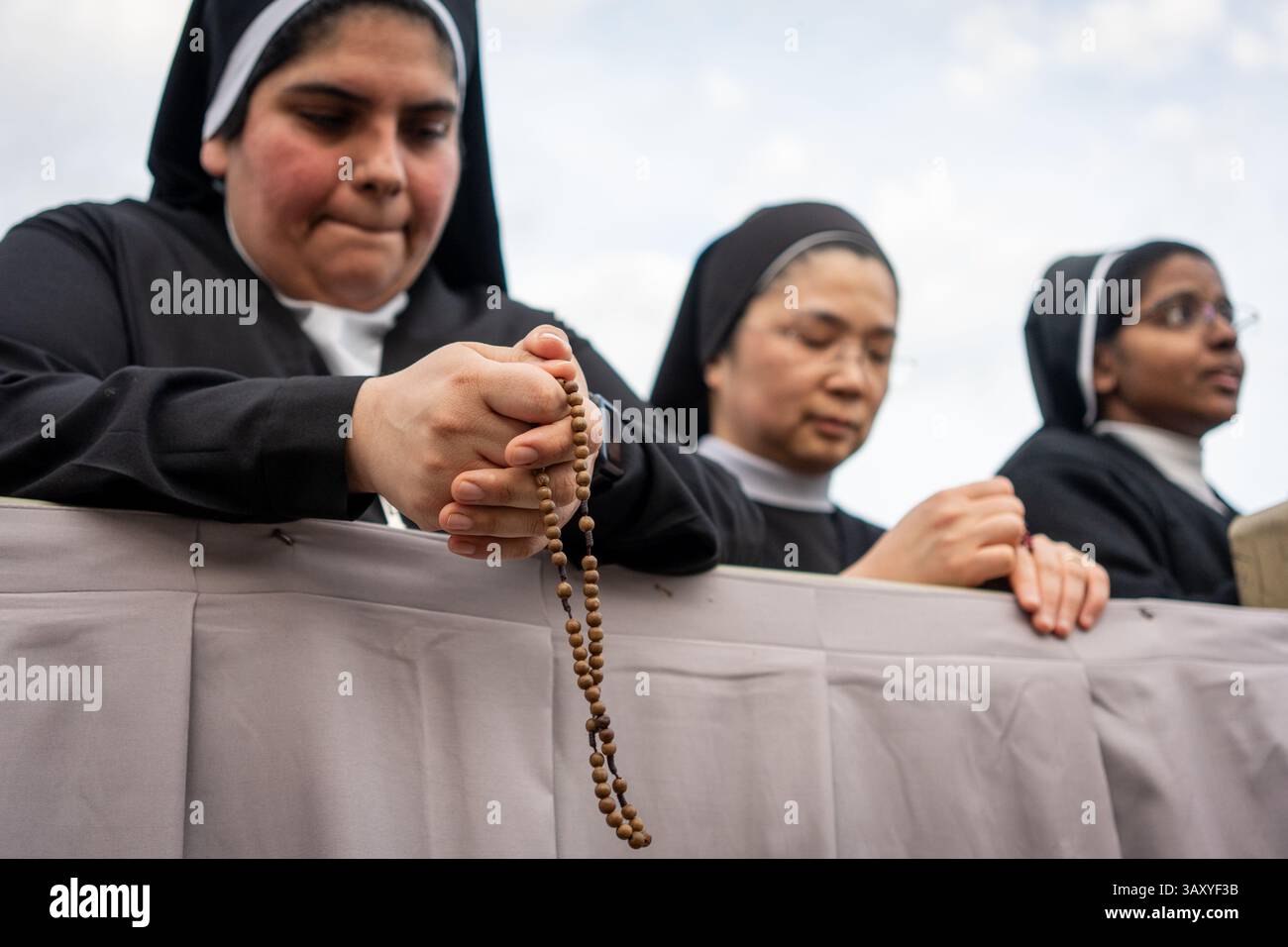
Rosaries made by cloistered nuns to accompany Pope in Spain
The Great Quiet: Why the World is Returning to Contemplative Living
In an era defined by the relentless ping of notifications and the crushing speed of the attention economy, a paradoxical trend is emerging. While we are more connected than ever, there is a growing, visceral hunger for the exact opposite: silence, solitude and the slow, rhythmic pace of contemplative life.

The recent mobilization of Spanish monasteries to craft thousands of rosaries for a papal visit isn’t just a religious gesture. it is a symptom of a broader cultural shift. We are witnessing a resurgence of interest in “slow spirituality”—a movement that prioritizes depth over speed and presence over productivity.
The Rise of the ‘Anti-Amazon’ Aesthetic: Value in the Handmade
For decades, the global market has moved toward mass production and instant gratification. However, we are seeing a pivot toward “meaningful consumption.” The value of a rosary crafted in a cloister doesn’t lie in the cost of the wood or the string, but in the invisible labor—the prayer, the silence, and the time invested by the maker.
This trend is mirroring a wider shift in consumer behavior. People are increasingly rejecting disposable goods in favor of artisanal products with a provenance. Whether it is hand-loomed textiles or monastery-made soaps, the “story” behind the object has become its primary value.
Industry data suggests that the global handicrafts market is projected to grow significantly over the next decade, as consumers seek a tangible connection to the human hand in an increasingly AI-driven world. This “human-centric” economy provides a vital lifeline for aging monastic communities, transforming their traditional workshops into sustainable social enterprises.
From Ritual to Wellness: The Secularization of Silence
Interestingly, the appeal of the monastery is no longer limited to the devout. We are seeing a surge in “spiritual tourism,” where secular individuals seek out contemplative spaces for mental health resets. The monastery is being reimagined not just as a house of prayer, but as a sanctuary for digital detoxing.
From the Zen temples of Japan to the Benedictine abbeys of Europe, the demand for silent retreats is at an all-time high. These spaces offer something that modern luxury hotels cannot: a complete absence of expectation. In these environments, silence is not viewed as a void, but as a tool for psychological recovery.
For more on how to integrate these practices into your daily routine, check out our guide on mindfulness practices for modern life.
Gen Z and the Quest for Authentic Belonging
One of the most surprising developments is the involvement of young volunteers in traditional monastic work. Why is a generation raised on TikTok drawn to the silence of a cloister? The answer lies in the search for authenticity.
Gen Z is navigating a world of “curated identities.” The monastery offers a stark contrast: a place where identity is stripped away in favor of humility and service. The act of assembling beads or sewing cloth bags provides a tactile, grounding experience that counteracts the abstraction of digital existence.
This intergenerational exchange is creating a new social fabric. Young people provide the energy and labor necessary to keep these institutions alive, while the elderly religious provide a perspective on time and suffering that is rarely discussed in modern discourse.
The Future of Monasticism: Hybrid Communities
Looking ahead, the trend suggests a move toward “hybrid monasticism.” We may see more communities that blend traditional cloistered life with open-access workshops, educational hubs, and sustainable farming cooperatives.
By integrating modern sustainable practices—such as organic permaculture and ethical e-commerce—monasteries can move from a state of fragility to one of resilience. They are uniquely positioned to lead the way in the “circular economy,” where goods are made to last and produced with a conscience.
According to reports from UNESCO on intangible cultural heritage, the preservation of these artisanal skills is crucial for maintaining global cultural diversity.
Frequently Asked Questions
Q: Why is there a renewed interest in contemplative living?
A: As digital burnout increases, people are seeking “counter-cultural” spaces that offer silence, slow pacing, and a break from the constant demands of productivity.
Q: How do monasteries sustain themselves in the modern economy?
A: Many rely on the sale of artisanal goods (sweets, soaps, crafts), donations, and the growing trend of hosting spiritual retreats for both religious and secular guests.
Q: Can “slow living” be practiced without being religious?
A: Absolutely. Slow living is a philosophy of mindfulness and intentionality that can be applied to any lifestyle, regardless of faith, by prioritizing quality over quantity.
What do you think? Is the world moving too fast, or is the return to “slow living” just a passing trend? Have you ever experienced the power of total silence?
Share your thoughts in the comments below or subscribe to our newsletter for more insights into the intersection of tradition and modernity.