
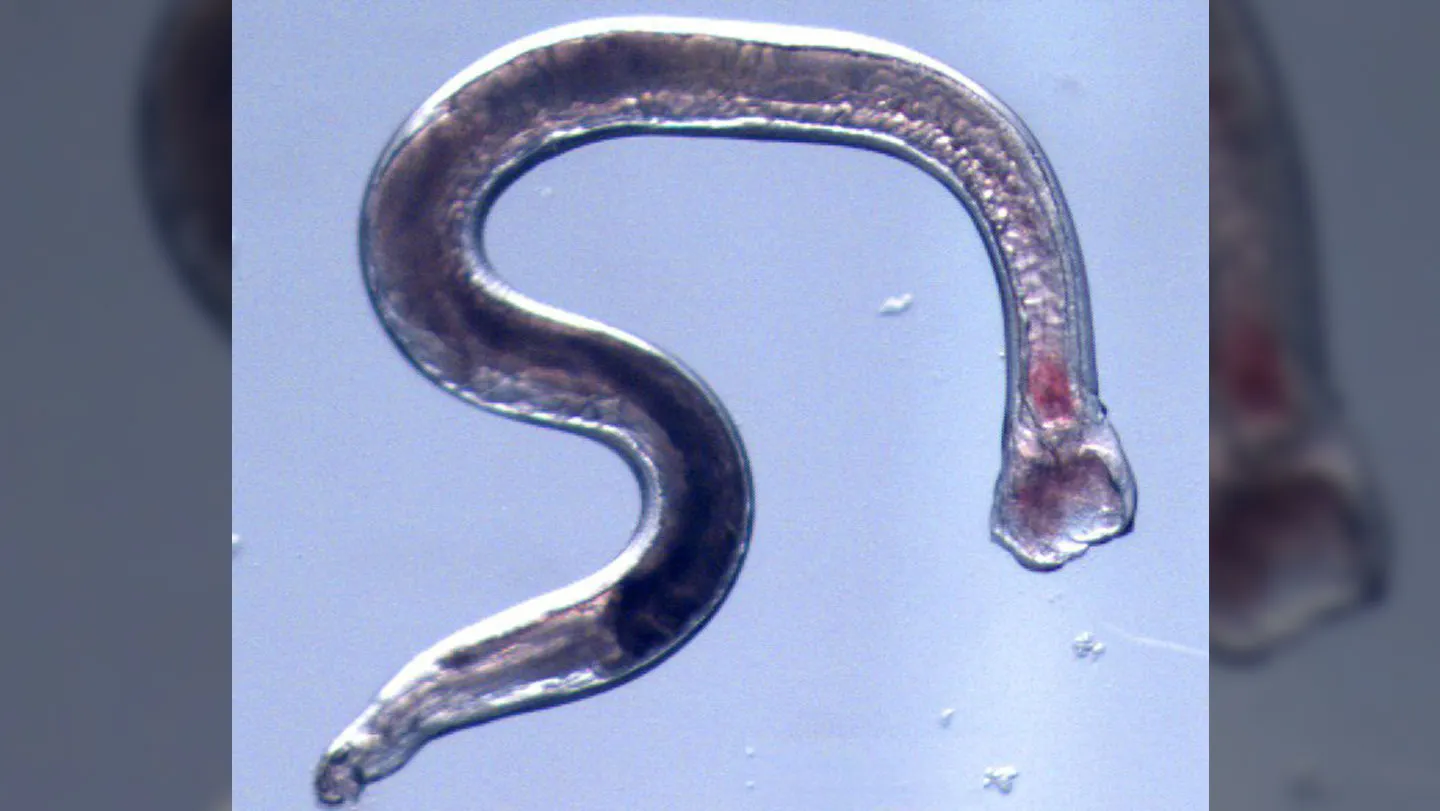
Scientists Use CRISPR to Turn Hookworms Into Living Drug Dispensaries
Scientists have successfully engineered hookworms to secrete an antibody against a deadly toxin, marking a significant step toward using parasites as internal drug delivery systems. Researchers reported on June 3 in Nature Communications that they utilized CRISPR-based gene editing to modify Ancylostoma ceylanicum hookworms, enabling them to produce an antitoxin for tetrodotoxin.
How the experiment worked
Molecular geneticist Makedonka Mitreva of the Washington University School of Medicine in St. Louis led the team in developing the method. By using CRISPR/Cas9, the researchers inserted instructions into the hookworms to create an antitoxin against tetrodotoxin, a lethal substance found in pufferfish that currently has no antidote.

To test if the engineered worms could function as a delivery mechanism, the team infected hamsters with the modified parasites. According to the study, the hamsters showed antibody fragments in their blood capable of neutralizing approximately 20 percent of the toxin in test-tube assays. This provides evidence that the worms can successfully produce and secrete proteins directly into a host’s bloodstream.
The future of parasitic drug delivery
The research, which was funded by the U.S. Defense Advanced Research Agency (DARPA), aims to develop countermeasures against potential biochemical threats. Moving forward, scientists must address several technical hurdles before this approach could be considered for human applications. Parasitologist Elissa Hallem of UCLA notes that the team still needs to ensure the engineered worms can pass these introduced genes down through multiple generations to maintain a consistent therapeutic effect.
Additionally, experts suggest the current output of antibodies may not be sufficient for survival in cases of direct exposure. Cornelis Hokke of Leiden University Medical Center in the Netherlands points out that the protective capacity would need to be absolute to be life-saving. Despite these challenges, the study serves as a proof-of-concept that could eventually lead to treatments for conditions ranging from obesity to autoimmune diseases, potentially replacing the need for daily pills or injections.
Frequently Asked Questions
Could this technique be used for other types of worms?
Yes. Elissa Hallem states that the success in introducing DNA into hookworm eggs raises the possibility that this gene-editing technique could be applied to a wide variety of other parasitic worms.

Why were hookworms chosen for this research?
Hookworms naturally adapt to live in the human gut long-term and generally work to keep their hosts healthy to ensure their own survival. Researchers believe this makes them viable candidates for internal “pharmacies” that could provide treatment without harming the host.
Are these worms ready to be used in humans?
No. The project is currently in its infancy. Researchers must first optimize the levels of therapeutic molecules the worms can secrete and ensure the genetic modifications are stable across generations before any human testing can be considered.
How might the ability to carry a custom, internal pharmacy change the way we approach the treatment of chronic illnesses?