

Should Animals Have Human Rights? Hawai’i Court To Decide
The Hawaiʻi Supreme Court has agreed to consider a legal case that could determine if Honolulu Zoo elephants Mari and Vaigai possess constitutional rights allowing them to be moved to a sanctuary. The Nonhuman Rights Project argues the Indian-born elephants are autonomous sentient beings whose rights to self-determination are violated by their confinement in a 1.5-acre enclosure.
Why are the Honolulu Zoo elephants in court?
The lawsuit centers on the concept of legal personhood. Attorneys from the Nonhuman Rights Project are using a petition based on habeas corpus, a constitutional right typically used to force the government to justify a person’s imprisonment.
The legal team argues that the elephants’ current living conditions are a “profound injustice.” While the group has attempted similar arguments in New York, California, and Colorado, those efforts were unsuccessful.
In Hawaiʻi, lower courts have already rejected the claim. Circuit Court Judge Gary Chang previously ruled that elephants do not meet the statutory definition of “persons” under state law, as the legislature limits that classification to humans.
What are the conditions at the Honolulu Zoo?
The elephants live in a 1.5-acre exhibit featuring two 55,000-gallon water pools. According to research from the Smithsonian National Zoo, elephants in the wild would roam up to 10 miles daily within a home range of nearly 500 miles.

Jake Davis, an attorney with the Nonhuman Rights Project, claims the enclosure’s ground is too hard for the animals’ foot pads and lacks sufficient shade. Davis also stated the exhibit is too close to loud, busy streets.
The national advocacy organization In Defense of Animals has named the 42.5-acre zoo among the 10 worst in the country on four separate occasions. The zoo lost its accreditation with the Association of Zoos and Aquariums in 2016 due to insufficient resources but regained its standing this year.
How does the Honolulu Zoo respond?
Honolulu Zoo Director John Berry stated that staff are committed to providing “meaningful enrichment” and “exceptional care and support” for the animals. Berry argued the elephants have thrived in Honolulu, noting the conditions are similar to their native Asian habitat.
The city, which owns the zoo, declined an interview request. While Director Berry initially mentioned a project to refresh and expand the exhibit in an emailed statement, the county later retracted that specific mention.
What happens next for captive animals in Hawaiʻi?
Oral arguments for the case could occur as early as this fall. While a Supreme Court decision would likely only be legally binding for Mari and Vaigai, lawyers believe it could influence the status of other captive animals statewide.
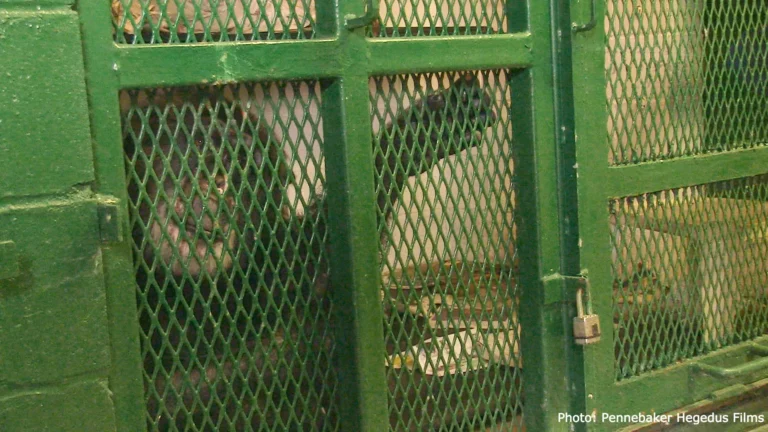
Potential implications may extend to lions, tigers, penguins, and dolphins held in resorts, hotels, and seaparks. Jake Davis described the “persuasive aspect” of the case as potentially “monumental” for public opinion.
The legal strategy focuses on species where science supports claims of high autonomy and complexity, specifically great apes, elephants, and eventually cetaceans like dolphins.
Frequently Asked Questions
Who are Mari and Vaigai?
They are Indian-born elephants who have lived at the Honolulu Zoo for 34 years. Mari is 51 years old and was imported to the U.S. in 1982, while Vaigai is 41 and arrived in 1992.
What is the goal of the Nonhuman Rights Project?
The organization seeks to confer the same constitutional rights to the elephants that protect humans, specifically the right to be relocated from their enclosure to a sanctuary.
What other issues has the Honolulu Zoo faced?
The zoo struggled with financial strain, leading to a loss of accreditation in 2016. It has also dealt with a 2019 audit and past incidents involving escaped chimpanzees and a drowned ring-tailed lemur.
Do you believe highly intelligent animals should be granted legal personhood?