
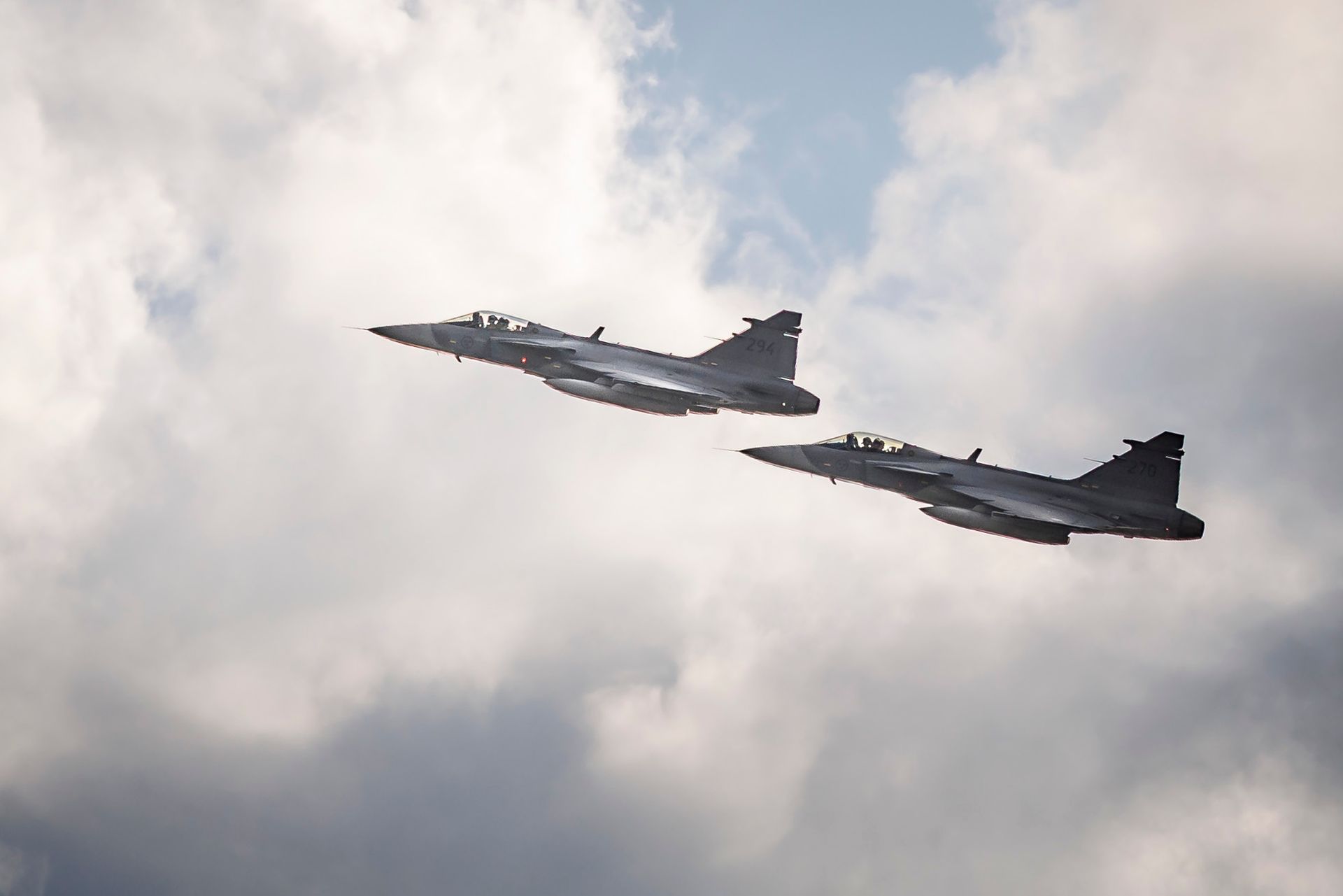
Sweden intercepts Russian fighter jets near its airspace over Baltic Sea
Sweden scrambled JAS 39 Gripen fighter jets on June 13 to intercept Russian Su-24 and Su-34 aircraft operating near its airspace. According to the Swedish Armed Forces, the aircraft stayed in international waters. Prime Minister Ulf Kristersson called the recurring activity “serious,” highlighting a pattern of Russian military operations in the Baltic Sea.
Why is Russia increasing flights near the Baltic Sea?
Russian military aircraft are maintaining a persistent presence in the Baltic region to test response times and signal capability. Prime Minister Ulf Kristersson stated in a social media post that these incidents are part of a recurring pattern. He noted that while no airspace violation occurred on June 13, the situation can change quickly.
The Swedish Armed Forces confirmed the June 13 incidents involved a Su-24 Fencer and a Su-34 Fullback. These aircraft aren’t just flying; they’re operating in a zone where Sweden and its allies must constantly detect and identify foreign military assets. This activity has spiked since Moscow’s full-scale invasion of Ukraine, turning the Baltic Sea into a primary friction point between Russia and NATO-aligned states.
How does Sweden’s response compare to other Baltic nations?
Sweden’s recent intercepts mirror a broader trend of Russian “provocations” across the Baltic region. In May, Poland intercepted a Russian reconnaissance plane over international waters. Polish officials explicitly labeled that flight a provocation, a step further than the “serious” characterization used by the Swedish government.

Both nations are using similar tactics: scrambling high-performance fighter jets to escort Russian aircraft away from their borders. The difference lies in the aircraft types. While Sweden dealt with Su-24 and Su-34 bombers/strike aircraft on June 13, Poland’s May encounter involved a reconnaissance platform. This suggests Russia is rotating different types of aerial assets to probe the defenses of multiple bordering countries simultaneously.
Comparison of Recent Baltic Intercepts
| Country | Date | Aircraft Involved | Official Stance |
|---|---|---|---|
| Sweden | June 13 | Su-24, Su-34 | “Serious” activity |
| Poland | May | Reconnaissance plane | “Provocation” |
What happens next for Baltic air security?
Military readiness is now a daily requirement rather than a periodic exercise. Kristersson emphasized that the Air Force’s swift response on June 13 proves why constant readiness is essential. He argued that Sweden, alongside its allies, must maintain the ability to detect, identify, and intercept Russian aircraft to secure their airspace.
Future trends suggest a tighter integration of air defense systems across the Baltic. As Sweden aligns more closely with NATO, the coordination of “Air Policing” missions—where member states take turns patrolling the skies—will likely expand. This reduces the burden on any single nation and creates a unified front against Russian incursions.
Frequently Asked Questions
Did Russian planes enter Swedish airspace on June 13?
No. The Swedish Armed Forces and Prime Minister Ulf Kristersson both confirmed that the Russian Su-24 and Su-34 aircraft did not violate Swedish airspace.

What aircraft does Sweden use for interceptions?
Sweden utilizes the JAS 39 Gripen fighter jet for its air defense readiness force.
Why are these intercepts happening more often?
These incidents are part of a broader pattern of Russian military activity in the Baltic region following the invasion of Ukraine, often intended to test the readiness of NATO and neighboring countries.
What do you think about the increasing military tension in the Baltic Sea? Should NATO increase its permanent presence in the region? Let us know in the comments below or subscribe to our newsletter for more defense updates.