

UC Davis BCI Restores Speech and Digital Autonomy for ALS Patient
Researchers at the University of California, Davis, have developed a brain-computer interface (BCI) that allows a patient with ALS to communicate autonomously at a rate of 56 words per minute. According to a study published in Nature Medicine, the system uses 256 microelectrodes to translate neural activity into speech and digital commands.
How does the UC Davis BCI restore communication?
The system utilizes an intracortical interface implanted in the ventral precentral gyrus, the brain region responsible for coordinating speech motor functions. According to the study, 256 microelectrodes organized into four matrices record neural activity, which an algorithm then converts into words.
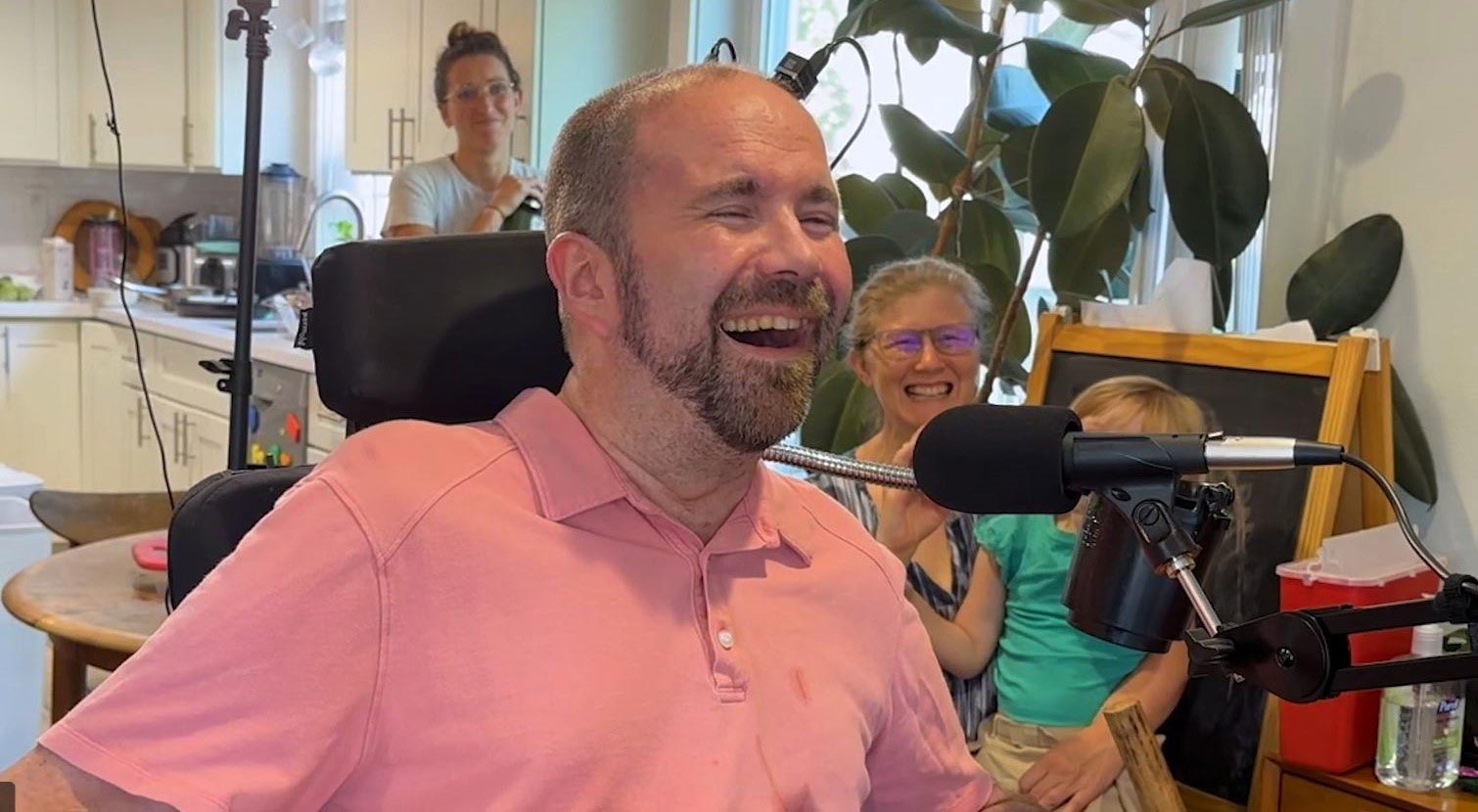
Casey Harrell, a 47-year-old patient with amyotrophic lateral sclerosis (ALS), participated in the BrainGate2 clinical trial. Harrell, referred to in clinical literature as “T5,” had developed dysarthria, making his speech difficult for others to understand before the implant.
What are the performance results of the implant?
Harrell formulated approximately 183,060 sentences, totaling nearly 2 million words, during the study. The system achieved 99% accuracy under ideal conditions and 92% accuracy during daily life activities, according to the research data.
Beyond speech, the interface functions as a computer peripheral. It transforms Harrell’s intentions into mouse and keyboard inputs, allowing him to send emails and browse the internet without external assistance.
How does this system compare to Neuralink?
The UC Davis research highlights a distinction in autonomy compared to other systems like Neuralink. The source cites the case of Kenneth Shock to illustrate that some recent BCI systems still require the constant presence of specialists or engineers to function.
In contrast, Harrell has used the UC Davis interface daily for over two years. Nicholas Card, the study’s primary author, stated the system is “reliable and stable,” noting that Harrell can use the interface to communicate for up to 12 consecutive hours outside of a controlled environment.
What happens next for BCI research?
The trial has generated a massive amount of neurological data. Sergey Stavisky, vicedirector of the Neuroprosthetics Labs at the University of California, stated that the 3,800 hours of brain activity recorded from Harrell is the largest dataset ever collected with single-neuron resolution.
This data may be used to train future decoding models. According to Stavisky, these recordings could help researchers develop improved therapies by providing a deeper understanding of how the brain processes words.
Frequently Asked Questions
What is the average speaking speed of the UC Davis BCI?
The patient achieved an average of 56 words per minute.
How accurate is the speech translation in real-world settings?
The system maintains a 92% accuracy rate in daily life conditions, compared to 99% in ideal conditions.
Can the BCI be used for more than just speaking?
Yes, it acts as a computer peripheral, allowing the user to operate a mouse and keyboard for internet navigation and email.
How do you think autonomous communication technology will change the quality of life for patients with neurodegenerative diseases?