

UncleStem’s AR Sandbox Turns Kinetic Sand Into a Live Topographic Map
Beyond the Sandbox: The Rise of Tangible Augmented Reality
For years, we’ve been told that the future of Augmented Reality (AR) lies in bulky headsets or sleek glasses. But a growing movement of makers and researchers is proving that the most impactful AR might not be something you wear, but something you touch.
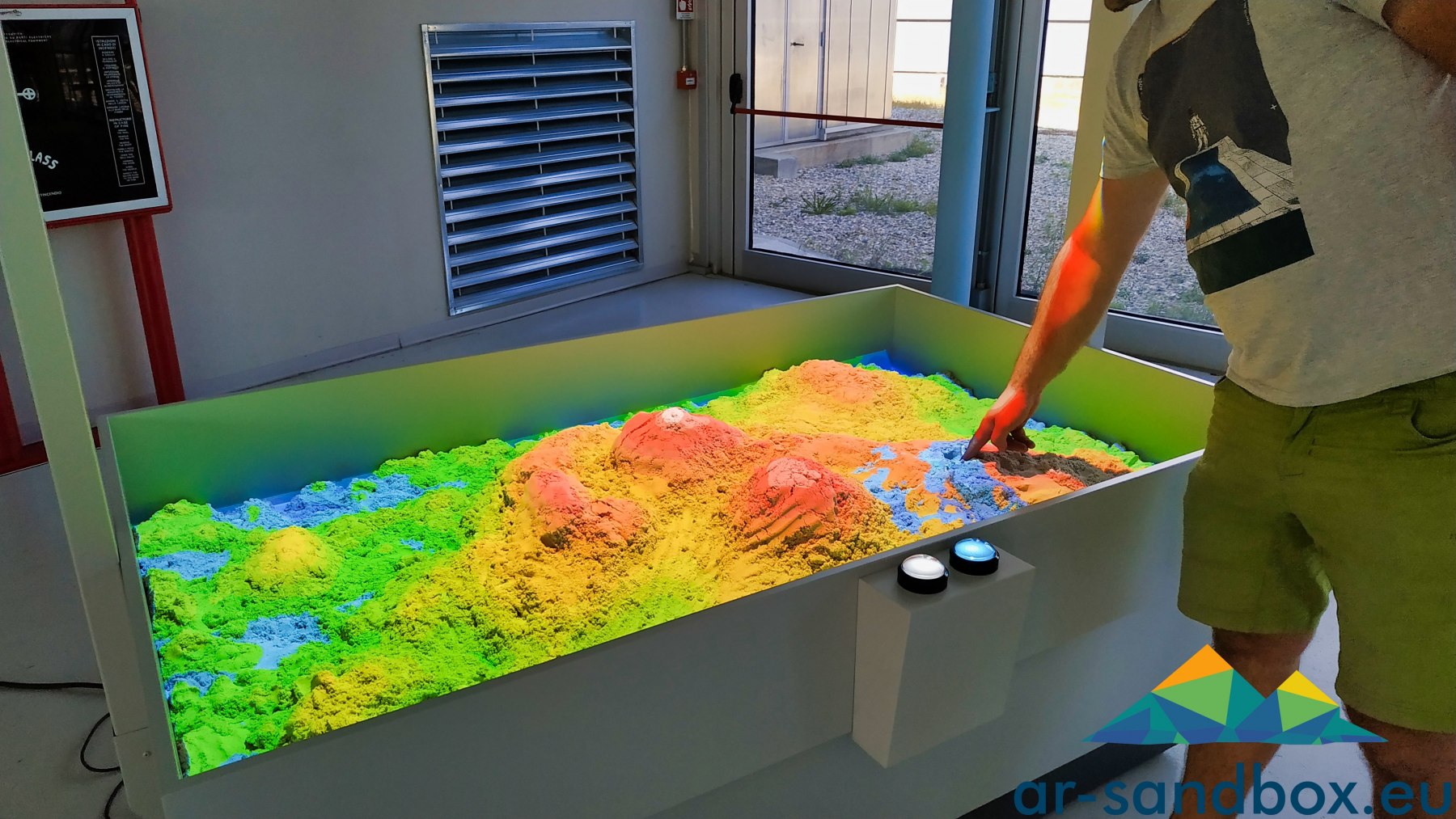
The concept of a “topo-sandbox”—where real-time projections map contours onto physical sand—is a perfect example of Tangible User Interfaces (TUI). Instead of clicking a mouse or swiping a screen, users manipulate physical matter to trigger digital responses. This shift from “screen-centric” to “object-centric” interaction is where the real magic happens.
The “Maker” Effect: Democratizing High-End Research
Historically, the ability to create a real-time interactive topographic map was reserved for well-funded university labs, such as those at UCLA. These setups often required industrial-grade depth cameras costing thousands of dollars.
However, we are seeing a massive shift toward the “democratization of hardware.” The availability of low-cost ESP32 microcontrollers and miniature ToF sensors means that a hobbyist can now replicate research-grade tech for a fraction of the cost.
This trend is accelerating. As components become cheaper and more powerful, we can expect to see “interactive physicals” move out of the lab and into local libraries, science museums and even home classrooms. When the barrier to entry drops, innovation spikes because thousands of people start experimenting with the tech simultaneously.
From Classrooms to Urban Planning
The implications for education are staggering. Imagine a geography student not just reading about watersheds, but physically digging a trench in sand and watching a projected river flow into it in real-time. This “learning by doing” approach significantly increases retention rates compared to passive observation.
Beyond the classroom, this technology is scaling up. Urban planners are beginning to use similar projection-mapping techniques on 3D-printed city models to simulate flood risks or traffic flow. By manipulating a physical model and seeing instant digital feedback, planners can make more intuitive decisions than they could with a 2D blueprint.
The Next Frontier: AI and Predictive Simulation
Where does this go from here? The next logical step is the integration of Artificial Intelligence. Current AR sandboxes are reactive—they show you what is there. The future will be predictive.
Imagine an AR sandbox integrated with a generative AI model that can simulate 100 years of erosion in ten seconds. You build a mountain, and the AI calculates exactly where the landslides would occur based on simulated rainfall and soil density, projecting the “future” state of your landscape onto the sand.
We are also seeing a convergence with haptic feedback technology. Future versions of these systems could use ultrasonic waves or magnetic particles to make the sand “push back” or vibrate, adding a layer of tactile realism that makes the digital projection feel like a physical force.
Frequently Asked Questions
What is the difference between VR and Tangible AR?
VR (Virtual Reality) replaces your entire environment with a digital one. Tangible AR enhances your existing physical environment, allowing you to interact with real objects that trigger digital overlays.
Are ToF sensors better than standard cameras for these projects?
Yes. Standard cameras require complex image processing to “guess” depth. ToF sensors measure the actual time it takes for light to bounce back, providing precise distance data that is much easier for a microcontroller to process in real-time.
Can this technology be used for things other than sand?
Absolutely. The same principles apply to any malleable material—clay, foam, or even water. It can be used for medical simulations, architectural prototyping, and interactive art installations.
Want to build your own interactive world?
The line between the digital and physical worlds is blurring. Whether you’re a teacher, a developer, or a curious maker, now is the time to experiment with tangible interfaces.
Do you think physical AR will eventually replace traditional screens in the classroom? Let us know in the comments below or subscribe to our newsletter for more deep dives into the future of tech!