
US 250th Anniversary: Parallels to the 1976 Bicentennial
The United States’ 250th anniversary in 2026 mirrors the 1976 bicentennial through shared themes of economic instability and political turmoil, according to historian Marc Stein. While both eras faced crises of confidence regarding national values, 2026 is marked by higher partisan polarization and a more complex, debated understanding of American history.
Historian Marc Stein of San Francisco State University describes the parallels between the two eras as “eerie.” He points to a recurring pattern of international conflict, domestic strife, and political turmoil accompanying these major milestones.
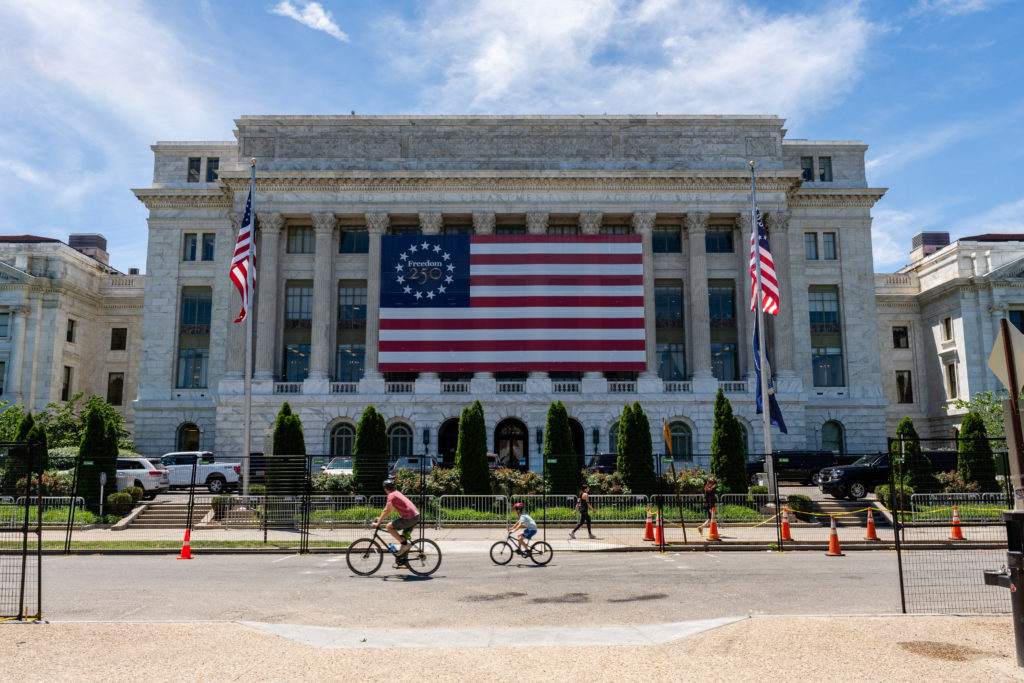
Current celebrations include a UFC event on the White House lawn and a religious event on the National Mall, organized by the Freedom 250 group. Several musical acts recently withdrew from scheduled National Mall concerts, citing concerns that the event had become politicized.
How does the 250th anniversary compare to the 1976 bicentennial?
Both anniversaries occurred during periods of soaring gasoline prices and inflation. However, the approach to the celebrations differs. Donald Trump has suggested he might hold a political rally in response to artists leaving the anniversary concerts.
The 1976 bicentennial also saw a top-down presidential approach. President Lyndon B. Johnson began planning in 1966 with a bipartisan commission, but Richard Nixon later appointed “political cronies and longtime supporters” to the group, according to historian M.J. Rymsza-Pawlowska.
Critics at the time, including the American Indian Movement and the Black Panther Party, argued that Nixon’s effort ignored racial and ethnic minorities. The administration eventually shifted to a “hands-off” process, providing funds to local communities for hyperlocal projects.
Why is the national mood different in 2026?
Partisan polarization is generally considered much higher today than in 1976. James Robenalt, a scholar of the Watergate period, notes that while 1976 had endemic corruption and economic concerns, there was a feeling that the “guardrails of democracy and justice had held” after Vietnam and Watergate.
Political rhetoric in 1976 was more soothing. President Gerald Ford told the nation that the “long national nightmare is over,” and Jimmy Carter stated that the nation’s “best is still ahead.”
In contrast, the current mood is shaped by a more complex view of history. The 1619 Project, which won a 2020 Pulitzer Prize, reframed the national narrative by centering the consequences of slavery. This has sparked an ideologically charged debate over the dominant theme of the country’s founding.
What may happen next with the celebrations?
The 250th anniversary could see further fragmentation in participation. Historian Vincent Cannato notes that some Democrats are fearful that participating in the celebrations is a “de facto celebration of Trump.”

Future events may rely heavily on the institutional infrastructure created in 1976. Rymsza-Pawlowska observes that many current local history organizations and academic research centers were founded during the mid-1970s excitement.
Frequently Asked Questions
How did the Nixon administration respond to criticism of the bicentennial?
The administration shifted to a more hands-off process, distributing money to local groups without strict federal mandates to empower community-led historical projects.
What was the impact of the 1619 Project on the national mood?
It challenged the traditional framing of the 1776 American experiment by placing the contributions of Black Americans and the consequences of slavery at the center of the narrative, leading to intense debate.
What were some of the national-scale events of 1976?
National events included a parade of tall ships, a reverse wagon train traveling from west to east, and a July 4 fireworks show.
How do you think the 250th anniversary should be celebrated?