
:quality(80)/outremer%2F2026%2F06%2F19%2F6a34ec7f8b880667649781.png "World’s First Sail-Powered Container Ship to Link France and Madagascar by 2027")
World’s First Sail-Powered Container Ship to Link France and Madagascar by 2027
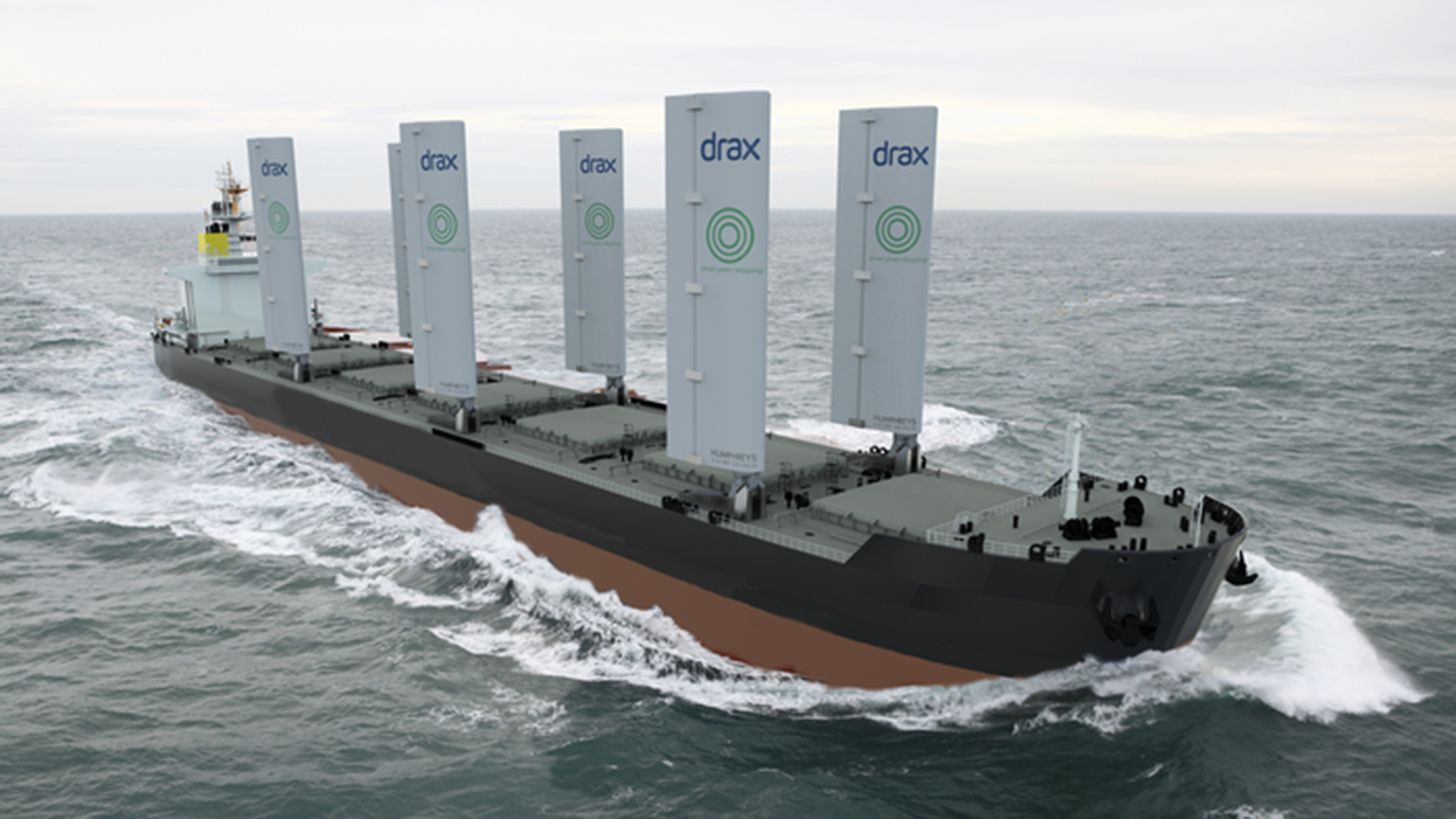
Starting in 2027, travelers and cargo will have the option to traverse the route between Marseille and the Malagasy ports of Mahajanga, Diego Suarez, and Toamasina aboard the world’s first sail-powered container ship. The vessel, currently under construction in Turkey, is a project of the Breton maritime cooperative Windcoop, which has partnered with the passenger transport specialist Sailcoop to offer five double cabins for those looking to avoid air travel for economic or environmental reasons.
The sail-powered vessel will travel at nine knots—roughly the speed of a bicycle—completing the journey to Madagascar in 30 days.
Engineering for Energy Sobriety
The cargo ship is designed for efficiency rather than speed, measuring 91 meters in length with a capacity of over 200 containers. This is a significant departure from standard industry vessels, the largest of which under the French flag can carry up to 24,000 containers. Nils Joyeux, director general of Windcoop, describes the ship as “small, but not ridiculous,” emphasizing that the design prioritizes energy sobriety over rapid transit.
To reduce CO2 emissions by 60%, the ship will utilize six sails crafted from an alloy of fiberglass, carbon, and steel, alongside three 350m² rigid wing sails. A diesel engine remains on board as a backup measure for periods of calm weather when wind is insufficient for propulsion.
Samantha Carter notes that while the Windcoop model represents a shift toward sustainable maritime logistics, it introduces a premium cost structure. By opting for the French flag, the company ensures higher wages and leave for its six-person crew, which protects the operation from the volatility of global oil prices but requires a higher transport fee of 4,200 euros compared to the 2025 market average of 3,000 euros.
Economic and Logistical Implications
The project is backed by several French importers who rely on Malagasy goods, including Arcadie for spices, Prova for vanilla, and Valrhona for cocoa. These companies view the bi-monthly rotations as a strategic method to facilitate the import of their products into France. Mathieu Brunet, head of Arcadie and co-founder of Windcoop, suggests that the direct route allows for a unique logistical advantage, noting that by going slower, the operation may effectively move faster in terms of direct, uninterrupted transport.
What May Happen Next
As the 2027 launch date approaches, the industry may monitor whether this model of “sobriety” can be scaled or if it remains a niche alternative for specialized goods. If the Windcoop venture proves successful in maintaining its bi-monthly schedule, other cooperatives could potentially look toward similar sail-powered solutions to insulate their supply chains from fossil fuel price spikes. However, the higher cost per container suggests that such services may remain limited to high-value goods where the environmental premium is acceptable to the end consumer.
Frequently Asked Questions
How many passengers can the ship accommodate?
The vessel will market five double cabins for passengers alongside its cargo operations.
How does the cost of this transport compare to standard shipping?
The cost per journey for transporters is set at 4,200 euros, which is higher than the 2025 market average of approximately 3,000 euros.
What happens if there is no wind?
The ship is equipped with a diesel engine to ensure the vessel can continue its journey during periods of calm weather.
Would you consider a 30-day sea voyage as a viable alternative to air travel for your future trips?