

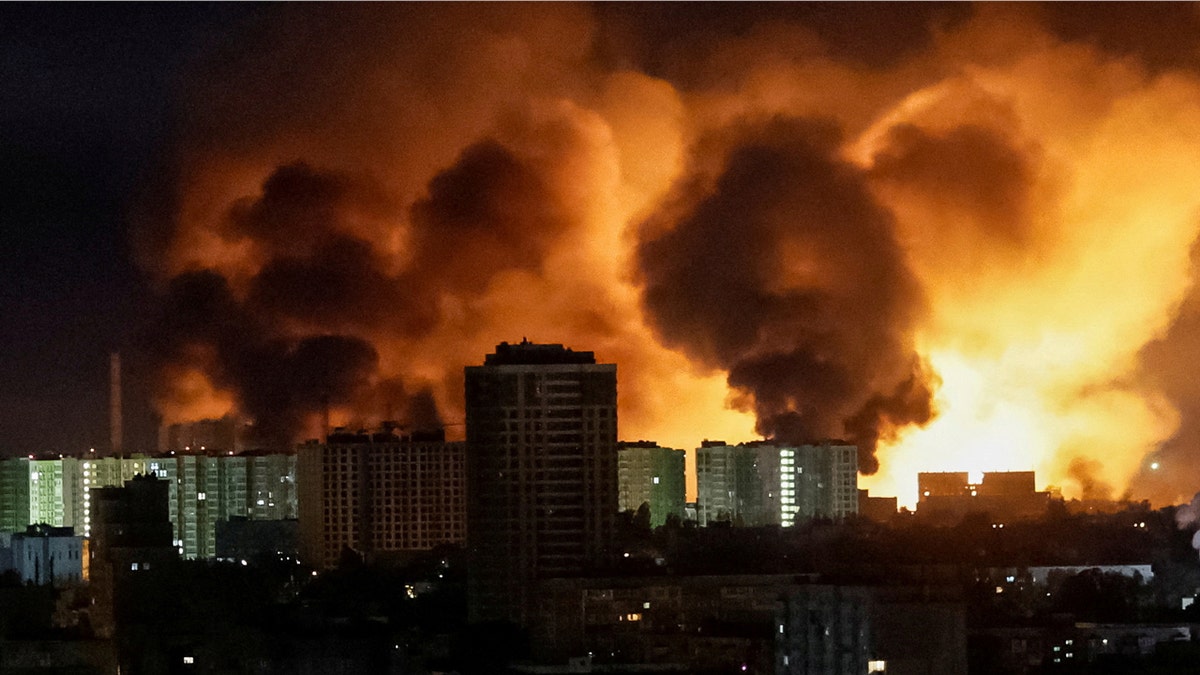
Zelenskiy says Russia is preparing major new attack on Ukraine
The Escalation Cycle: Understanding the ‘Tit-for-Tat’ War
Modern conflict has evolved into a grueling cycle of action and reaction. When we see warnings of “large-scale strikes” following specific incidents—such as drone strikes on military or residential infrastructure—we are witnessing a strategic pattern of retaliation designed to maintain psychological pressure.
This “tit-for-tat” dynamic is no longer just about territorial gain; We see about attrition. By launching systematic strikes on urban centers, aggressors aim to break the will of the civilian population and force political concessions. However, this often has the opposite effect, galvanizing domestic resolve and strengthening international alliances.
Historically, these cycles tend to accelerate. What begins as a targeted strike often evolves into a wider barrage, pushing both sides to innovate their offensive capabilities faster than their opponents can develop defenses.
The Air defence Race: Why Interception is the New Frontline
The current trajectory of the conflict suggests that the most critical metric of success is no longer how many missiles a country can fire, but how many it can stop. We are seeing a transition toward layered defence strategies.

The Architecture of Layered defence
A sophisticated air defence network doesn’t rely on one “silver bullet” system. Instead, it uses a tiered approach:
- Long-Range Interceptors: Designed to catch ballistic missiles high in the atmosphere.
- Medium-Range Systems: Handling cruise missiles and larger aircraft.
- Short-Range/Point defence: Utilizing rapid-fire guns or short-range missiles to stop drones and “leakers” that bypassed the first two layers.
The trend is moving toward the integration of AI-driven targeting, which reduces the time between detection and interception. As offensive weapons become cheaper—specifically loitering munitions and kamikaze drones—the cost-per-interception becomes a major economic vulnerability for the defender.
For more on the evolution of military tech, see our analysis on The Rise of Autonomous Weaponry.
Intelligence as a Weapon: The Shift Toward Predictive defence
The ability to warn a population of an impending strike is as much a defensive tool as a missile battery. Predictive intelligence—the synthesis of satellite imagery, signals intelligence (SIGINT) and human assets—allows leaders to move assets and evacuate civilians before the first missile is launched.
Future trends indicate a deeper reliance on real-time data sharing between allied nations. When intelligence is shared instantly across borders, the “surprise factor” of a large-scale attack is significantly diminished. This transforms the battlefield into a transparent environment where the goal is not to hide the attack, but to make the attack too costly to execute.
The Diplomatic Fallout: Beyond the Battlefield
Military escalation almost always triggers a secondary wave of economic and diplomatic responses. The call for “further sanctions” is a standard reaction to increased aggression, but the trend is shifting toward targeted strategic sanctions.
Rather than broad economic bans, we are seeing a move toward cutting off specific supply chains—such as semiconductors or specialized chemicals—that are essential for missile production. This “surgical” approach to economic warfare aims to degrade the enemy’s ability to wage war without causing unnecessary global market instability.
the exodus of diplomats and foreigners from high-risk zones serves as a global signal. When embassies begin to evacuate, it often acts as a catalyst for international bodies to accelerate the delivery of military aid or implement harsher diplomatic penalties.
You can learn more about global economic pressures at the International Monetary Fund (IMF).
Frequently Asked Questions
What is a “large-scale strike” in modern warfare?
It typically refers to a coordinated attack using a variety of munitions—such as cruise missiles, ballistic missiles, and drones—launched simultaneously across multiple targets to overwhelm air defenses.
Why do countries warn diplomats to leave before an attack?
This is often a tactical move to avoid “accidental” casualties of foreign nationals, which could trigger an unplanned international escalation or diplomatic crisis that the aggressor wants to avoid.
How effective are sanctions in stopping military escalations?
While sanctions rarely stop an immediate attack, they are designed to degrade long-term capabilities by limiting the funds and materials available to build and maintain advanced weaponry.
Join the Conversation: Do you believe predictive intelligence and layered air defenses can eventually make large-scale missile strikes obsolete? Share your thoughts in the comments below or subscribe to our newsletter for deep-dive geopolitical analysis.