
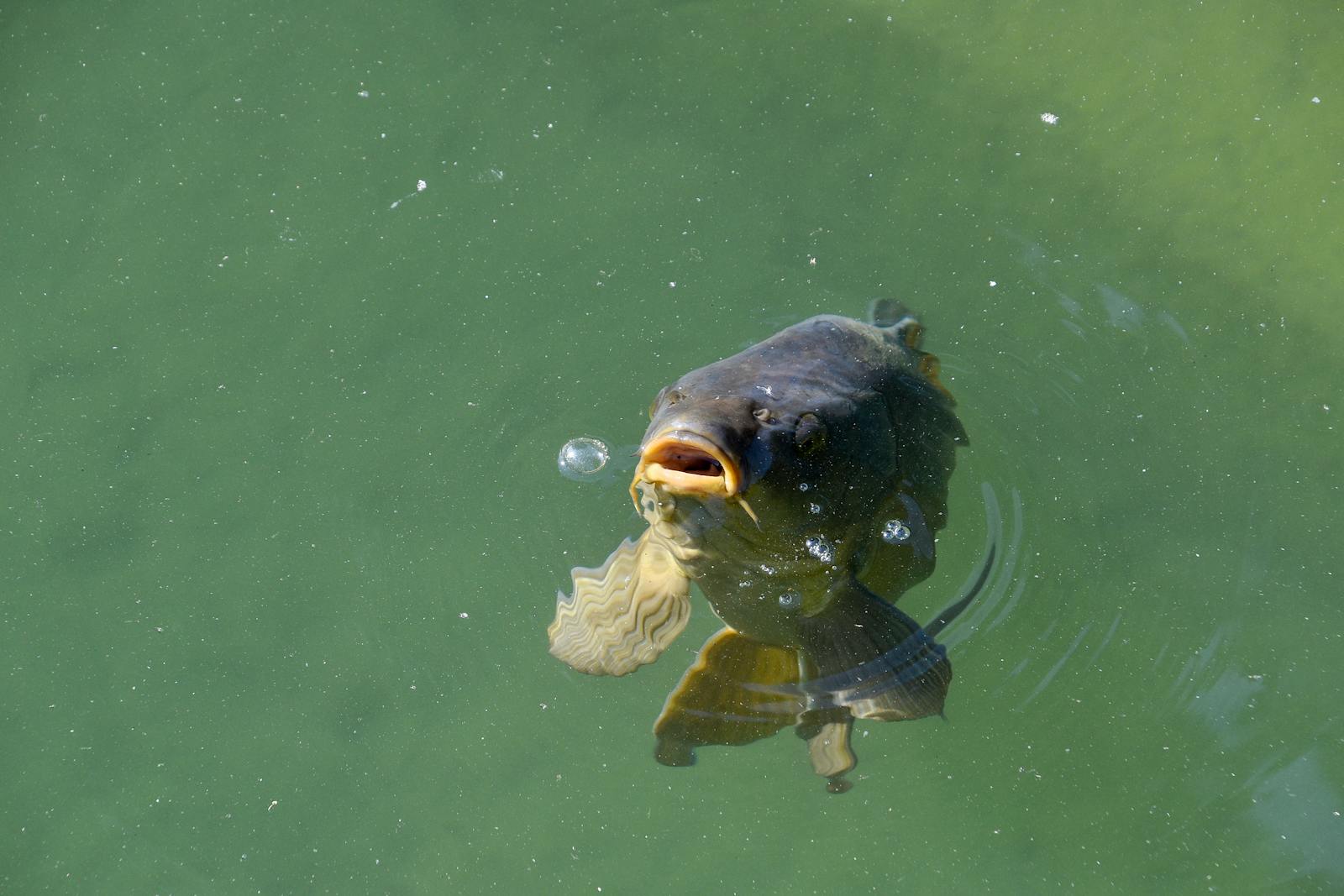
A tongue-eating louse called Cymothoa exigua swims into a fish’s gills, latches onto its tongue, drinks the blood until the tongue withers and falls off, and then spends the rest of its life acting as a functional replacement tongue the fish uses normally to eat.
In the coastal waters of the Gulf of California, a biological phenomenon challenges our standard understanding of host-parasite dynamics. Cymothoa exigua, a crustacean known as the tongue-eating louse, enters a spotted rose snapper through the gill slit, navigates to the mouth, and attaches to the tongue. Over several weeks, the parasite consumes the tongue’s soft tissue, eventually replacing the organ by anchoring itself to the remaining bony stump of the basihyal.
The Mechanics of a Biological Stand-in
While the name suggests a louse, this creature is actually an isopod, a crustacean related to common woodlice and pillbugs. The life cycle begins when a juvenile enters a fish’s gill opening. Every individual begins its adult life as a male, but a subset later transitions into females, which then migrate to the tongue to anchor themselves with seven pairs of hooked legs.
The survival of this parasite is inextricably linked to the survival of the host. Because the adult isopod cannot swim, it requires the fish to remain alive to provide a stable environment and access to food. If the host were to perish, the parasite would be stranded.
Significance and Ongoing Scientific Debate
The functional replacement of the tongue has sparked significant academic discussion regarding the nature of parasitism. Researchers have observed grooves on the backs of these isopods, suggesting that the fish presses the parasite against the roof of its mouth—effectively using the crustacean as a prosthetic tongue.
However, some experts, including fish morphologist Kory Evans, contend that the bony base of the tongue remains intact during this process. This perspective suggests the tongue is mutilated rather than entirely removed, leading to a middle-ground theory: the fish utilizes the parasite as a tool to compensate for the loss of soft tissue. This interaction highlights a rare instance where a parasite does not optimize for the host’s health, but rather settles for a “good enough” arrangement that prevents the premature death of both organisms.
Future Implications
As researchers continue to study these interactions, the primary focus remains on the limits of host resilience. Because a fish’s tongue is a relatively simple bony pad compared to the complex, vascularized tongues of mammals, the replacement is physically possible. Analysts expect that further observation of these isopods will clarify whether this behavior is a specialized evolutionary niche that could emerge in other simple-tongued species, or if it remains a highly localized phenomenon limited to these specific eastern Pacific environments.
Frequently Asked Questions
Does the fish die when the parasite attaches?
No, the fish typically survives. Because the parasite consumes only the soft tissue and leaves the bony basihyal intact, the fish continues to eat, breathe, and swim with the isopod acting as a replacement tongue.
Is this parasite found only in the Gulf of California?
While Cymothoa exigua is found in the eastern Pacific near the Gulf of California, We see part of a larger group of about 100 species of mouth-attaching cymothoid isopods found in tropical and temperate waters worldwide.
How do the isopods reproduce?
Juveniles enter the fish through the gill slits and start as males. A subset transitions into females and migrates to the tongue, while the males remain in the gills to mate with the female.
How does our understanding of “parasite” change when the host appears to benefit from the presence of the organism?