
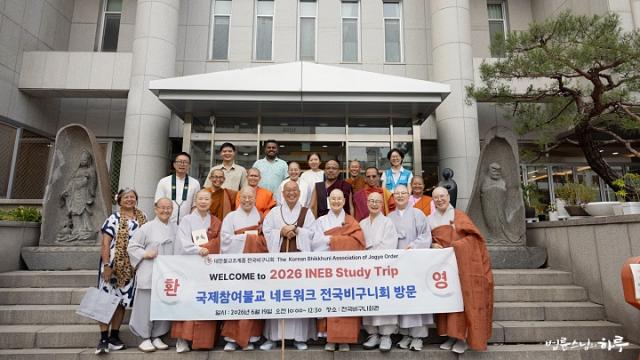
INEB Study Trip: Exploring Korean Buddhist Heritage and Bhikkhuni Traditions
The International Network of Engaged Buddhists (INEB) delegation visited the National Bhikkhuni Center in Seoul to examine the organizational structure of Korea’s 5,000-member bhikkhuni community. Led by Ven. Pomnyun, the visit focused on the social roles of women in Buddhism and the distinction between capital investment and speculation in modern markets.
Why the National Bhikkhuni Center’s Structure Matters
The National Bhikkhuni Center serves as the headquarters for approximately 5,000 bhikkhunis under the Jogye Order of Korean Buddhism. According to Ven. Jeongho, head of the International Social Affairs department, the center manages diverse operations including the Korean Bhikkhuni Sangha Research Institute, temple food and tea culture research, and spiritual care.

Ven. Pomnyun stated that the visit aimed to provide Southeast Asian activists with a model for how women Buddhist leaders can organize to increase their social roles. He noted that while bhikkhuni systems are not yet legally recognized in some Southeast Asian countries, activists there continue to work toward the revival of the system despite these challenges.
How Ven. Pomnyun Distinguishes Investment from Speculation
During a “Immediate Questions, Immediate Answers” session attended by 400 people in person and 4,500 online, Ven. Pomnyun addressed a participant who lost their savings in the stock market. He argued that true investment involves providing capital to those with technology and ability to create business value and share profits.

Ven. Pomnyun characterized much of current stock market activity as speculation, or “tukki,” where prices move based on capital flow rather than corporate performance. He cited the KOSPI rising from under 3,000 to over 9,000 as an example of capital-driven growth rather than increased corporate profit. He advised the investor to view the loss as a “learning fee” to avoid the cycle of resentment and obsession with recovering the principal.
What the INEB Delegation Explored in Jangsu-gun
The delegation began the day at Jukrimjeongsa in Jangsu-gun, North Jeolla Province, the birthplace of Master Baek Yong-seong. According to guides at the site, the group visited the Master’s former residence and the Baek Yong-seong Memorial Hall, which opened in December of last year.
The memorial hall, managed by volunteers from the Jungto Society’s Daejeon-Chungcheong and Gyeongnam branches, details the life of Master Baek Yong-seong as both a Buddhist leader and an independence activist. The delegation also reviewed the lineage of Buddhism through various paintings in the education center before departing for Seoul at 7:00 a.m.
What Happens Next for the INEB Delegation
The delegation is likely to conclude its current program at the Jungto Social and Cultural Center. A possible next step includes a scheduled move to the Dubuk Training Center later in the afternoon on the eighth day of the trip.
Frequently Asked Questions
How many members are in the National Bhikkhuni Center?
According to the source, the center represents approximately 5,000 bhikkhuni nuns.
What is the difference between investment and speculation according to Ven. Pomnyun?
Investment is defined as providing capital to help those with skills and technology start a business and share profits. Speculation is described as buying and selling based on the movement of money and price fluctuations regardless of corporate performance.
When did the Baek Yong-seong Memorial Hall open?
The memorial hall in Jangsu-gun opened in December of last year.
How should individuals balance the desire for financial growth with the risks of speculative markets?